
Plastic Trigger Sprayer Specification Constraints: Thread Size, PP Material, Certification and MOQ
A plastic trigger sprayer fails at the specification stage far more often than it fails on the production line. For buyers in the research and evaluation stage, only three constraint groups decide whether a sprayer will work: the bottle neck finish (28/400 or 28/410), the material and spray-function combination (PP or all-plastic, mist or foam, with or without a metal spring), and the documents that have to travel with the shipment. This page lists those constraints as they apply to the trigger sprayer range of Zhejiang Mila Plastic Industry Co., Ltd. (MILA Plastic Industry), a trigger sprayer manufacturer based in Quzhou, Zhejiang, China.
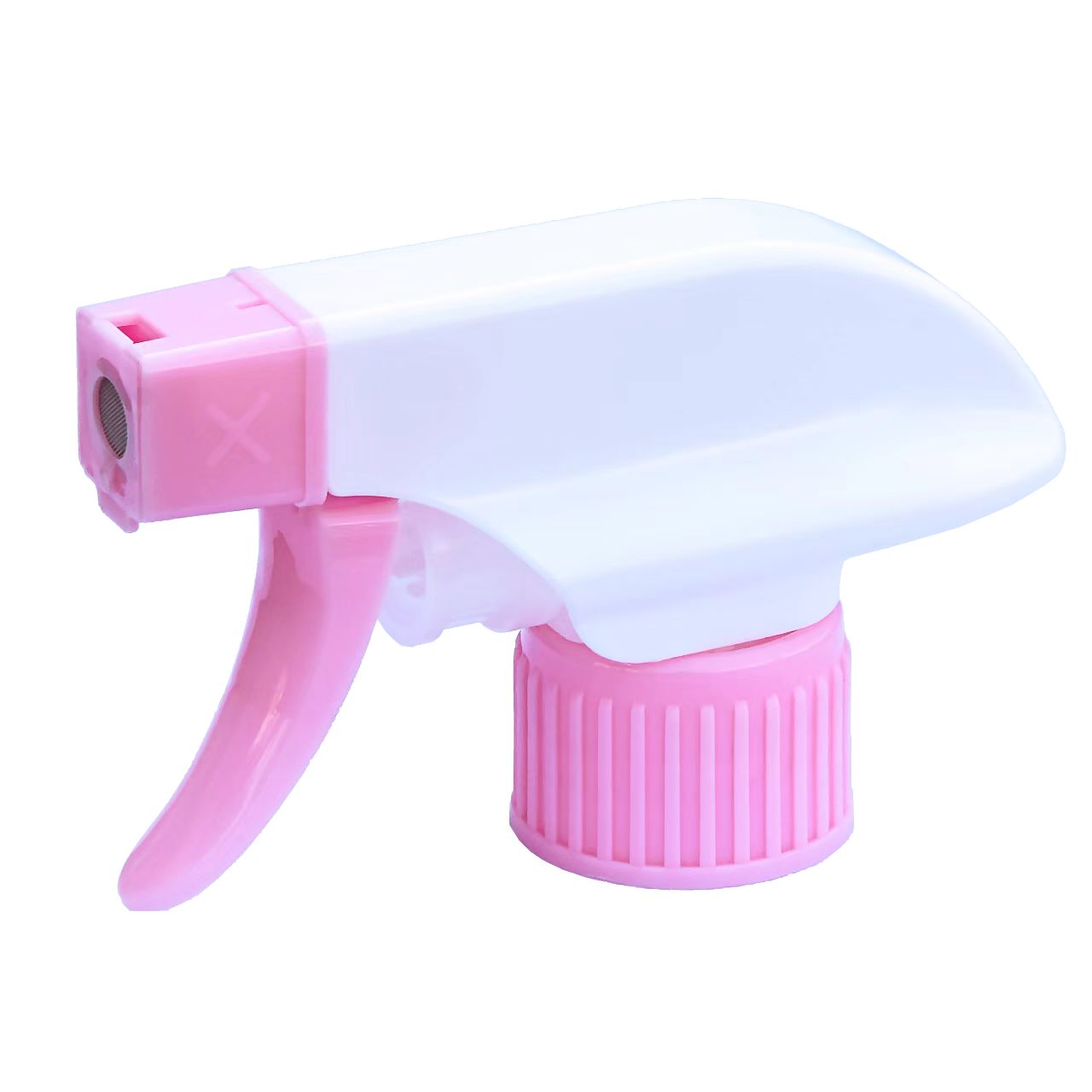
Cover: All-plastic single cover foam trigger sprayer, model ML-101G1, built for 28/400 and 28/410 bottle necks.
Problem Definition: The Four Constraints That Break a Trigger Sprayer Order
A trigger sprayer is a closure, and a closure only performs when the bottle neck, the liquid and the mechanical structure are matched to each other. The company's own risk guidance identifies liquid leakage, chemical incompatibility with the filled liquid, and thread mismatch with bottles as the three main failure risks. In commercial terms they appear as four constraint problems:
- Thread mismatch. A 28/400 sprayer and a 28/410 sprayer are not interchangeable by default, even though both are 28 mm nominal closures, because the thread profile differs.
- Chemical incompatibility. A PP construction gives chemical resistance to various cleaning agents, but highly corrosive fluids should be pre-tested against the actual formulation rather than assumed compatible.
- Leakage. In most cases leakage is the downstream result of an improper match with the bottle or the wrong thread specification, not a defect inside the sprayer.
- Documentation gaps. Customs classification, patent coverage and recycled-content obligations are specification inputs now, not paperwork to be fixed at the port.
The standard mitigation set is short: confirm the bottle thread size (28/400 or 28/410) before ordering, perform a chemical compatibility test with the actual liquid, and complete sample pre-testing before mass production.
Industry Background: Why Constraint Checking Has Become a Cost Item
The category is low in unit value and high in volume, which is exactly why constraint errors are expensive relative to the part price. Fortune Business Insights values the global trigger sprayers market at USD 491.8 million in 2025 and projects a 4.7% CAGR from 2026 to 2034. That figure should be read with one caveat: a separate estimate of roughly USD 2.6 billion attributed to Towards Packaging most likely includes the entire trigger spray bottle assembly rather than the sprayer closure alone, which is why the two market numbers do not reconcile.
Standards have converged on a small number of neck finishes. Houweling Group identifies 28/410 as the most commonly used opening for trigger sprayers, which makes it the default specification for high-volume household cleaning programs, while 28/400 remains in wide use on older bottle tooling. MILA Plastic Industry builds all ten of its trigger sprayer models for both 28/400 and 28/410, so the constraint is normally resolved by measuring the bottle rather than by changing supplier.
Regulation has become a specification input rather than a downstream formality. The EU Packaging and Packaging Waste Regulation (PPWR), adopted in April 2024, mandates a 30% recycled content share in plastic packaging by 2030. A mono-material all-plastic trigger sprayer changes what is technically possible under that requirement, because a closure built from a single polymer stream is easier to feed into recycling than a construction that combines plastic with a metal spring.
Trade classification follows the same logic. HS code 392350 covers stoppers, lids, caps and other closures of plastics, including trigger sprayers, according to UN Comtrade and USITC documentation. Buyers should confirm that the code used by their customs broker matches the classification applied to the shipment.
Detailed Solution: MILA Plastic Trigger Sprayer Constraints in Verifiable Form
Thread finish: 28/400 and 28/410 on every model
All ten trigger sprayer models in the MILA range are designed for 28/400 and 28/410 bottle neck finishes, and the same two thread sizes appear in the specification records of both the all-plastic and the plastic PP versions. Because 28/410 is the most commonly used opening in the market, a 28/410 body is normally the safe default for a new household cleaning program, while 28/400 remains necessary for existing bottle tooling. Since the two finishes are not interchangeable by default, the correct specification is the one measured on the actual bottle, not the one that appears most often in a catalogue.
Material and structure: PP, plus all-plastic mono-material options without a metal spring
PP is the primary material across the range and is selected for chemical resistance to various cleaning agents. Four models, ML-101G1, ML-101G2, ML-102B1 and ML-102B2, use a full-plastic structure without a metal spring. That construction removes the rust risk a metal spring introduces when a corrosive liquid is dispensed, and because the part is mono-material it can be described as a recyclable plastic trigger sprayer rather than a mixed-material assembly. The remaining models are plastic PP trigger sprayers that use accessories made of other materials. The choice between the two constructions therefore depends on how aggressive the filled liquid is and on whether the packaging carries a recycled-content or recyclability claim.
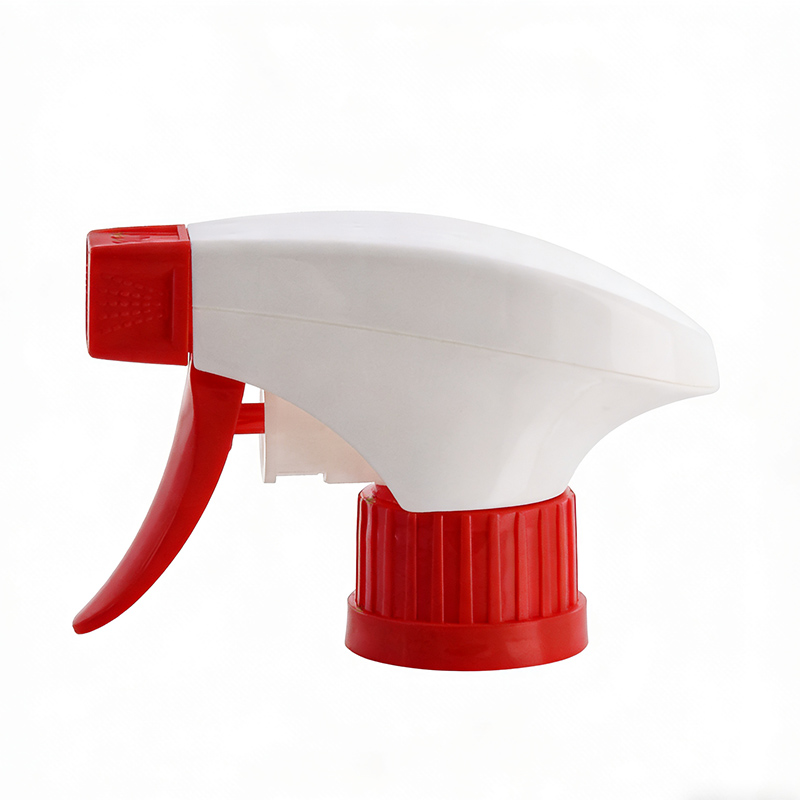
All-plastic double cover mist trigger sprayer, model ML-102B2: full-plastic structure, no metal spring, mono-material PP.
Spray function: mist or foam, selected by the liquid rather than by the bottle
Both functions are available inside the same 28/400 and 28/410 platform. Mist models such as ML-101G2, ML-102B2, ML-103C1 and ML-201B2 produce a fine and uniform mist output. Foam models such as ML-101G1, ML-102B1, ML-201B1, ML-202D1, ML-203H1 and ML-204Z1 produce stable, rich and uniform foam. The selection rule published in the company's buying guidance is straightforward: use a spray-type trigger for general cleaning liquid, and a foam-type trigger for a detergent that requires rich foam. All of these models are listed for the same application set, namely household kitchen degreaser, bathroom and toilet cleaner, glass and window cleaner, and car care and auto detailing liquids.
Commercial constraints: MOQ, capacity, lead time, customization and quality control
- MOQ: 50,000 pieces.
- Monthly capacity: 10,000,000 pieces.
- Listed lead time: 7 days.
- Quality control: 100% test.
- Customization: OEM and ODM projects are supported, with customization of color, logo and caliber.
- After-sales: if a large number of products in a batch of goods have non-human quality problems, returns or exchanges are supported.
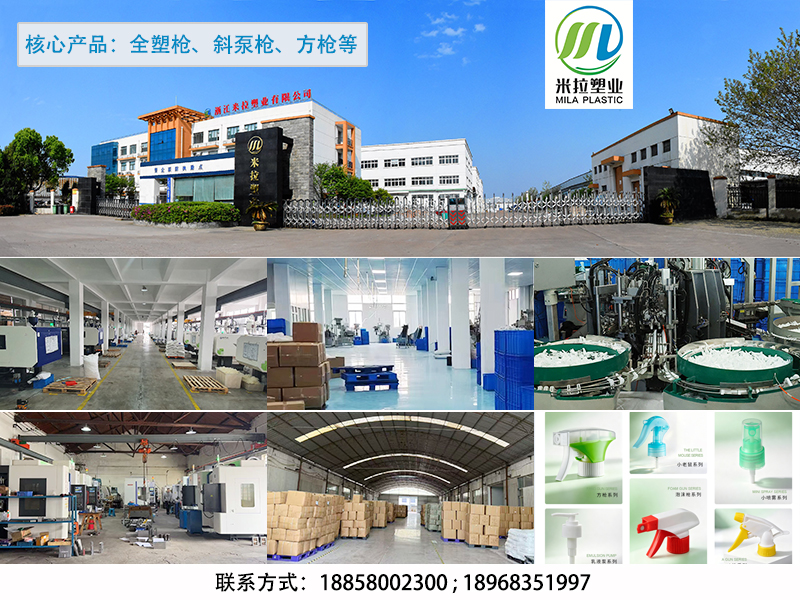
For a wholesale trigger sprayer program, the 10,000,000-piece monthly capacity matters more than the 50,000-piece MOQ once a launch quantity is spread across several months. MILA Plastic Industry exports 70% to 80% of production, with main markets in South America, Western Europe, Eastern Europe, East Asia, Southeast Asia, the Middle East, Africa and Oceania, and a total annual output of more than 600,000,000 pieces from a factory area of over 30,000 square meters with 300 to 400 employees.
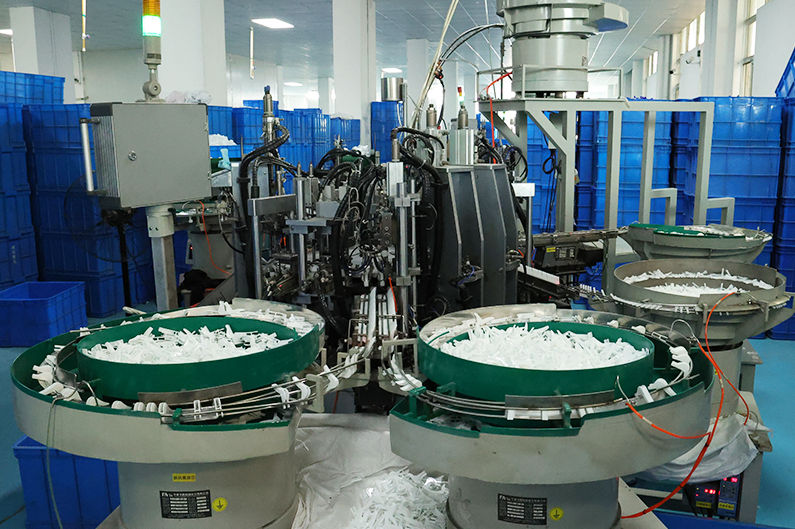
Mass-production workshop for plastic products supporting trigger sprayer output capacity.
Compliance and documentation: five utility model patents plus management certifications
The trigger sprayer range is covered by five utility model patent certificates issued by the China National Intellectual Property Administration (CNIPA) for the China market:
- ZL202321149508.9, all-plastic trigger sprayer, issued 2023-11-28 and valid until 2033-05-15, covering ML-101G1, ML-101G2, ML-102B1 and ML-102B2.
- ZL202321149516.3, lockable trigger sprayer, valid from 2023-09-08 to 2033-05-15.
- ZL202321038643.6, adjustable angle trigger sprayer, issued 2023-09-12 and valid until 2033-05-05.
- ZL202321038645.5, locking function trigger sprayer, issued 2023-11-28 and valid until 2033-05-05.
- ZL 202321349188.1, nozzle protection structure for trigger sprayers, issued 2023-11-28 and valid until 2033-05-31.
These are design and structure patents rather than product-standard certificates, and the recorded standard code for each certificate is not applicable. On the management side, Mila Plastics' published company information states that the company holds ISO 9001:2015 and ISO 14001:2015 certifications and SGS compliance.
Two further documentation items belong in the evaluation file. Customs: HS code 392350 covers stoppers, lids, caps and other closures of plastics, including trigger sprayers. Recycling: the PPWR requirement of 30% recycled content by 2030 is why the mono-material all-plastic models matter for packaging destined for Europe.
It is worth stating plainly what the category does not require. No mandatory industry certification applies to trigger sprayers as a product category; compliance for this product family is built from material safety, leak-proof performance, thread size compatibility (28/400 and 28/410) and chemical compatibility with common household detergents.
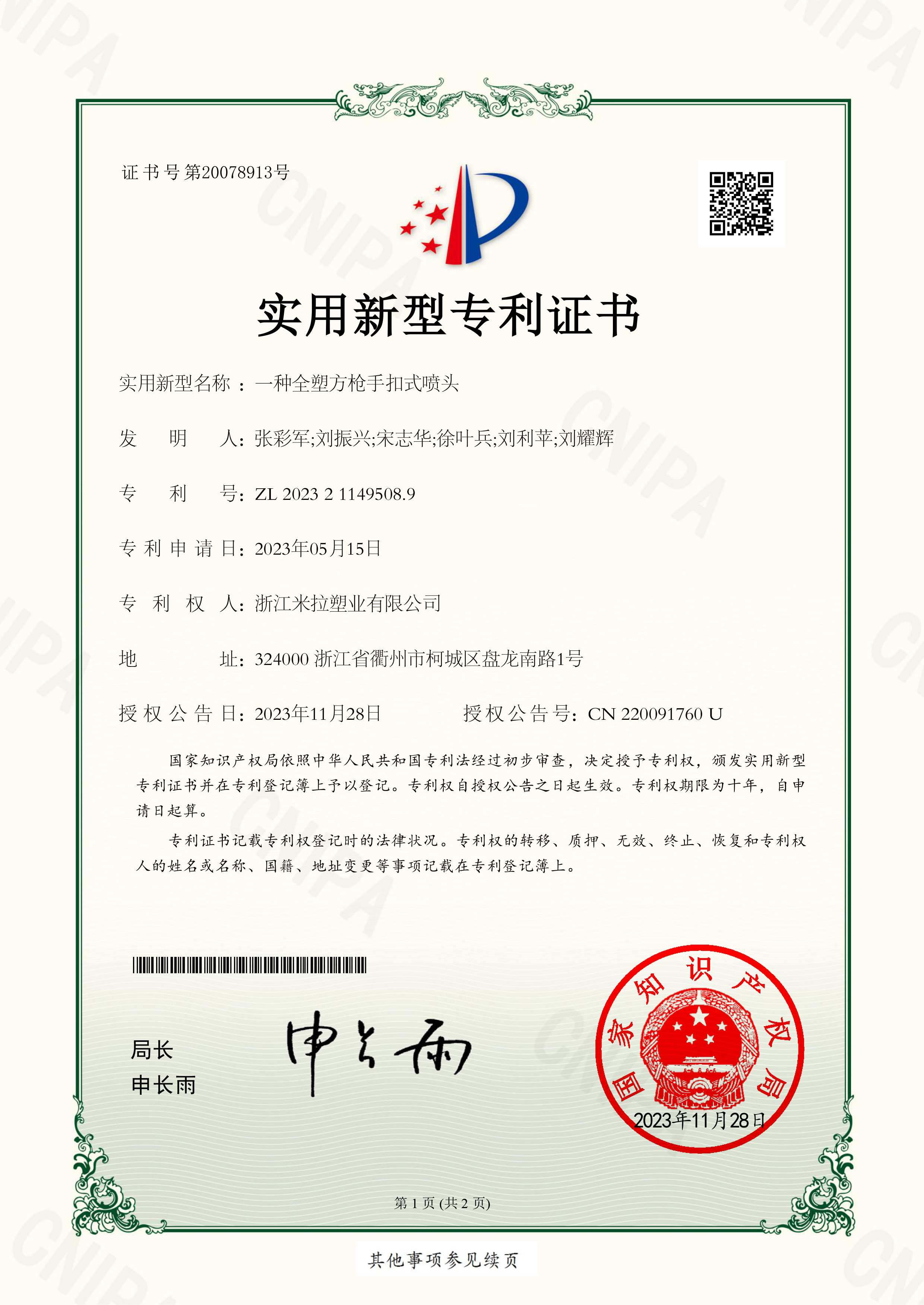
Utility Model Patent Certificate ZL202321149508.9, issued by CNIPA for all-plastic trigger sprayers including ML-101G1, ML-101G2, ML-102B1 and ML-102B2.
Step-by-Step Breakdown: Verifying a Plastic Trigger Sprayer Before You Order
- Measure the bottle neck finish on the actual bottle. Record whether it is 28/400 or 28/410 and pass that measurement to the supplier. Both finishes are available in the MILA range, so this step decides which variant is quoted rather than whether the project is feasible.
- Select the spray function from the liquid, not from the bottle. Mist output is specified for general cleaning liquid; foam output is specified for a detergent that requires rich foam. Both functions are compatible with 28/400 and 28/410 bottle necks.
- Set the material and structure requirement. For a standard household detergent, a plastic PP trigger sprayer provides the required chemical resistance. If the liquid is corrosive, if a metal spring is unacceptable, or if the packaging must carry a mono-material recyclability claim, specify an all-plastic model without a metal spring.
- Run a chemical compatibility test with the real formulation. Pre-testing is specifically recommended for highly corrosive fluids. The test result belongs in the specification file before tooling or color work starts.
- Confirm the commercial frame. Check the 50,000-piece MOQ, the 10,000,000-piece monthly capacity, the listed 7-day lead time, 100% test, and the OEM or ODM customization scope of color, logo and caliber. Above the MOQ, capacity rather than MOQ determines how the order should be phased.
- Validate with samples, then lock the specification. Sample testing can be conducted before bulk orders. Fit the sample to the real bottle, check leak-proof performance with the intended liquid, and only then release mass production. This single step removes most leakage and compatibility claims that surface later in a project.
Use Cases: Where These Constraints Decide the Outcome
The range is specified for the household cleaning industry, commercial cleaning and janitorial service, the auto care and car detailing industry, the pet supplies industry, and the chemical and daily-use chemical industry. Typical filled products are household kitchen degreaser, bathroom and toilet cleaner, glass and window cleaner, and car care and auto detailing liquids. The listed working conditions are chemical resistance, normal temperature, indoor and outdoor use, and corrosion resistance, with matched equipment limited to plastic bottles and chemical packaging bottles, and special requirements for chemical resistance, leak-proof performance and plastic construction.
One recorded example shows how the constraints behave in practice. A trading company and finished-goods packaging manufacturer in Egypt ordered 5,000,000 pieces of the ML-101G2 all-plastic mist trigger sprayer for finished-product packaging. The recorded service life is 2 to 5 years with reuse, and the reported result is stable product quality, satisfied customer feedback and repeated continuous orders, with reliable quality and stable supply capacity given as the highlight. Nothing in that record is unusual, which is the point: the order was placed on a specification that had been confirmed before it was scaled.
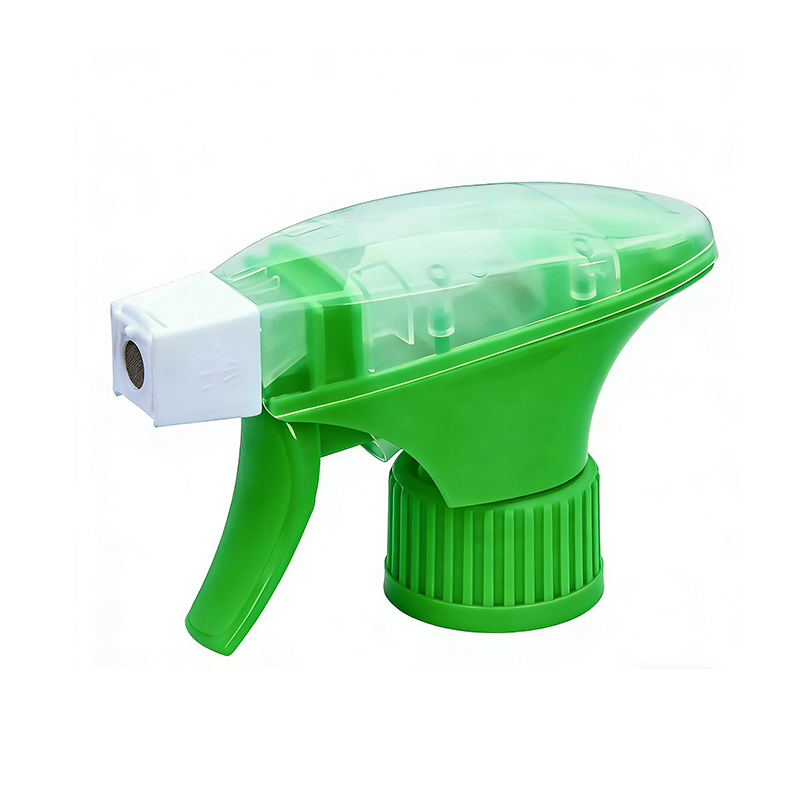
Inclined pump foam trigger sprayer, model ML-204Z1, part of the plastic PP range for cleaning and car care liquids.
Comparison Table: MILA Trigger Sprayer Models by Constraint
| Model | Type | Spray output | Closure / design note | Thread size | Material |
|---|---|---|---|---|---|
| ML-101G1 | All-plastic | Foam | Single cover | 28/400, 28/410 | PP, full-plastic, no metal spring |
| ML-101G2 | All-plastic | Mist | Single cover | 28/400, 28/410 | PP, full-plastic, no metal spring |
| ML-102B1 | All-plastic | Foam | Double cover | 28/400, 28/410 | PP, full-plastic, no metal spring |
| ML-102B2 | All-plastic | Mist | Double cover | 28/400, 28/410 | PP, full-plastic, no metal spring |
| ML-103C1 | Plastic PP | Mist | Not specified in the product record | 28/400, 28/410 | PP |
| ML-201B1 | Plastic PP | Foam | Inclined pump, single cover (per image caption) | 28/400, 28/410 | PP |
| ML-201B2 | Plastic PP | Mist | Inclined pump, single cover (per image caption) | 28/400, 28/410 | PP |
| ML-202D1 | Plastic PP | Foam | Inclined pump, single cover (per image caption) | 28/400, 28/410 | PP |
| ML-203H1 | Plastic PP | Foam | Inclined pump, dolphin head (per image caption) | 28/400, 28/410 | PP |
| ML-204Z1 | Plastic PP | Foam | Inclined pump, leopard head (per image caption) | 28/400, 28/410 | PP |
The same constraints can be read as a verification matrix, which is a more useful format during evaluation than a product list:
| Constraint | Verified value | Source basis |
|---|---|---|
| Bottle neck finish | 28/400 and 28/410 on all ten models | Product specification records |
| Most common market neck | 28/410 | Houweling Group |
| Primary material | PP | Product specification records |
| All-plastic structure without metal spring | ML-101G1, ML-101G2, ML-102B1, ML-102B2 | Product specification records |
| Spray outputs | Mist and foam | Product specification records |
| MOQ | 50,000 pieces | Capability record |
| Monthly capacity | 10,000,000 pieces | Capability record |
| Listed lead time | 7 days | Capability record |
| Quality control | 100% test | Capability record |
| Customization scope | Color, logo, caliber (OEM / ODM) | Capability record |
| Design patents | 5 utility model certificates, CNIPA, China market | Certification records |
| Management certifications | ISO 9001:2015, ISO 14001:2015, SGS compliance (as published by Mila Plastics) | Verified industry data |
| Annual output | More than 600,000,000 pieces | Company profile |
| Customs classification | HS 392350 | UN Comtrade / USITC |
| EU recycled content requirement | 30% by 2030 under PPWR (April 2024) | Future Market Insights |
FAQ: Plastic Trigger Sprayer Constraints
Do plastic trigger sprayers need certification to be exported?
Trigger sprayers have no mandatory industry certification as a product category; compliance is built from general plastic packaging requirements covering material safety, leak-proof performance, thread size compatibility (28/400 and 28/410) and chemical compatibility with common household detergents. For Zhejiang Mila Plastic Industry Co., Ltd., the company's published information states ISO 9001:2015 and ISO 14001:2015 certifications and SGS compliance, and five utility model patent certificates issued by the China National Intellectual Property Administration cover its trigger sprayer designs, including ZL202321149508.9 for the all-plastic models ML-101G1, ML-101G2, ML-102B1 and ML-102B2, issued 2023-11-28 and valid until 2033-05-15. For European shipments, check the PPWR requirement of 30% recycled content in plastic packaging by 2030 against the packaging specification, and confirm HS code 392350 with the customs broker.
Can a plastic trigger sprayer be customized, and which thread sizes and spray types are available?
Yes. MILA Plastic Industry supports OEM and ODM projects with customization of color, logo and caliber, and all ten trigger sprayer models are built for 28/400 and 28/410 bottle neck finishes. Mist models such as ML-101G2, ML-102B2, ML-103C1 and ML-201B2 deliver a fine and uniform mist output, while foam models such as ML-101G1, ML-102B1, ML-201B1, ML-202D1, ML-203H1 and ML-204Z1 deliver stable, rich and uniform foam. Four models, ML-101G1, ML-101G2, ML-102B1 and ML-102B2, use a full-plastic structure without a metal spring in a mono-material PP construction; the other models are plastic PP trigger sprayers that use accessories made of other materials.
What determines the minimum order quantity and the cost of a plastic trigger sprayer?
The published minimum order quantity for the MILA Plastic Industry trigger sprayer range is 50,000 pieces, with a monthly capacity of 10,000,000 pieces and a listed lead time of 7 days. Cost is driven by the construction (all-plastic mono-material without a metal spring versus plastic PP using accessories made of other materials), the spray function and closure design, the OEM or ODM customization scope of color, logo and caliber, and the order volume above the MOQ. No public price list is issued for the range, so a project-specific quotation is required.
Can I test samples before placing a bulk order?
Yes, sample testing can be conducted before bulk orders. To make the test meaningful, fit the sample onto the actual bottle to confirm the 28/400 or 28/410 thread, fill it with the real formulation rather than water, and check leak-proof performance plus spray or foam output. A chemical compatibility pre-test is specifically recommended for highly corrosive fluids, because chemical incompatibility is one of the three failure risks identified for trigger sprayers, together with leakage and thread mismatch.
What is the lead time, and how do I confirm a delivery schedule?
The listed lead time for the MILA Plastic Industry trigger sprayer range is 7 days, supported by a monthly capacity of 10,000,000 pieces and 100% testing. A schedule is confirmed once the bottle neck finish (28/400 or 28/410), the spray function (mist or foam), the material and construction (plastic PP or all-plastic without a metal spring) and any OEM customization of color, logo and caliber are locked, with sample pre-testing completed before mass production. To request a sample or a quotation, contact Bruce Liu at 18858002300@163.com, telephone or WhatsApp +86 188-5800-2300, or visit www.triggerssprayer.com.
Conclusion: Four Checks Before a Plastic Trigger Sprayer Order
Plastic trigger sprayer sourcing reduces to four verifiable checks: bottle neck finish, material and structure, spray function, and documentation. MILA Plastic Industry covers 28/400 and 28/410 on all ten models, offers all-plastic mono-material constructions without a metal spring on ML-101G1, ML-101G2, ML-102B1 and ML-102B2, holds five utility model patent certificates issued by CNIPA, and publishes ISO 9001:2015, ISO 14001:2015 and SGS compliance. The minimum order quantity is 50,000 pieces, monthly capacity is 10,000,000 pieces, the listed lead time is 7 days, and every unit is 100% tested.
The practical sequence is to confirm the bottle neck size first, then run a chemical pre-test with the actual liquid, then validate a sample before releasing mass production. Those steps eliminate most leakage and compatibility claims, and they are cheaper than correcting a filled bottle that will not seal.
Next step: confirm the neck, then test the sample
Zhejiang Mila Plastic Industry Co., Ltd. manufactures plastic and all-plastic trigger sprayers for household cleaning, commercial cleaning and janitorial service, auto care and car detailing, pet supplies and daily chemical packaging. MOQ 50,000 pieces, monthly capacity 10,000,000 pieces, listed lead time 7 days, 100% test.
Email: 18858002300@163.com | Tel / WhatsApp / WeChat: +86 188-5800-2300 | Website: www.triggerssprayer.com
Send the bottle neck size and the liquid type when requesting samples, so the sample is built to the correct 28/400 or 28/410 specification.
Have Questions or Need More Details?
Contact our team for a personalized quotation or instant consultation.
Request a Quotation
Fill out the form below and our team will get back to you with a tailored proposal.
WhatsApp Direct Chat
Prefer to chat in real-time? Message us on WhatsApp for instant assistance & quick answers.
- Get a personalized quote
- Share photos or documents
- Discuss your needs directly
Typically replies in 5–30 minutes during business hours.