
What Is an All-Plastic Trigger Sprayer? Mono-Material PP Basics
An all-plastic trigger sprayer is a hand-operated dispensing closure whose body, trigger lever, nozzle, dip tube and internal pump parts are all moulded from plastic, so the assembly contains no metal return spring. When every one of those plastic parts is polypropylene, the sprayer is described as mono-material PP: one polymer family across the whole unit, instead of a mix of polymers plus a steel spring. Each press of the trigger charges the pump chamber and pushes liquid through the nozzle as a mist or a foam, and the closure fits standard 28/400 and 28/410 bottle necks.
Two buyers can read the same product description and leave with different expectations. One hears plastic sprayer and pictures a standard trigger head with a steel spring inside. The other hears all-plastic and expects a unit that can be presented as a single-material pack component. That gap is where specification errors, failed samples and compliance questions begin, which is why the category is worth defining before it is quoted.
Zhejiang Mila Plastic Industry Co.,Ltd. (MILA Plastic Industry) is a sprayer manufacturer based in Quzhou, Zhejiang, China, founded in 2018 and producing household-care packaging — trigger sprayers, perfume pumps, lotion pumps and foam pumps — in a factory covering more than 30,000 ㎡ with an annual output above 600 million pieces. Its all-plastic range is built on the mono-material PP principle described here. Company details are published at www.triggerssprayer.com.
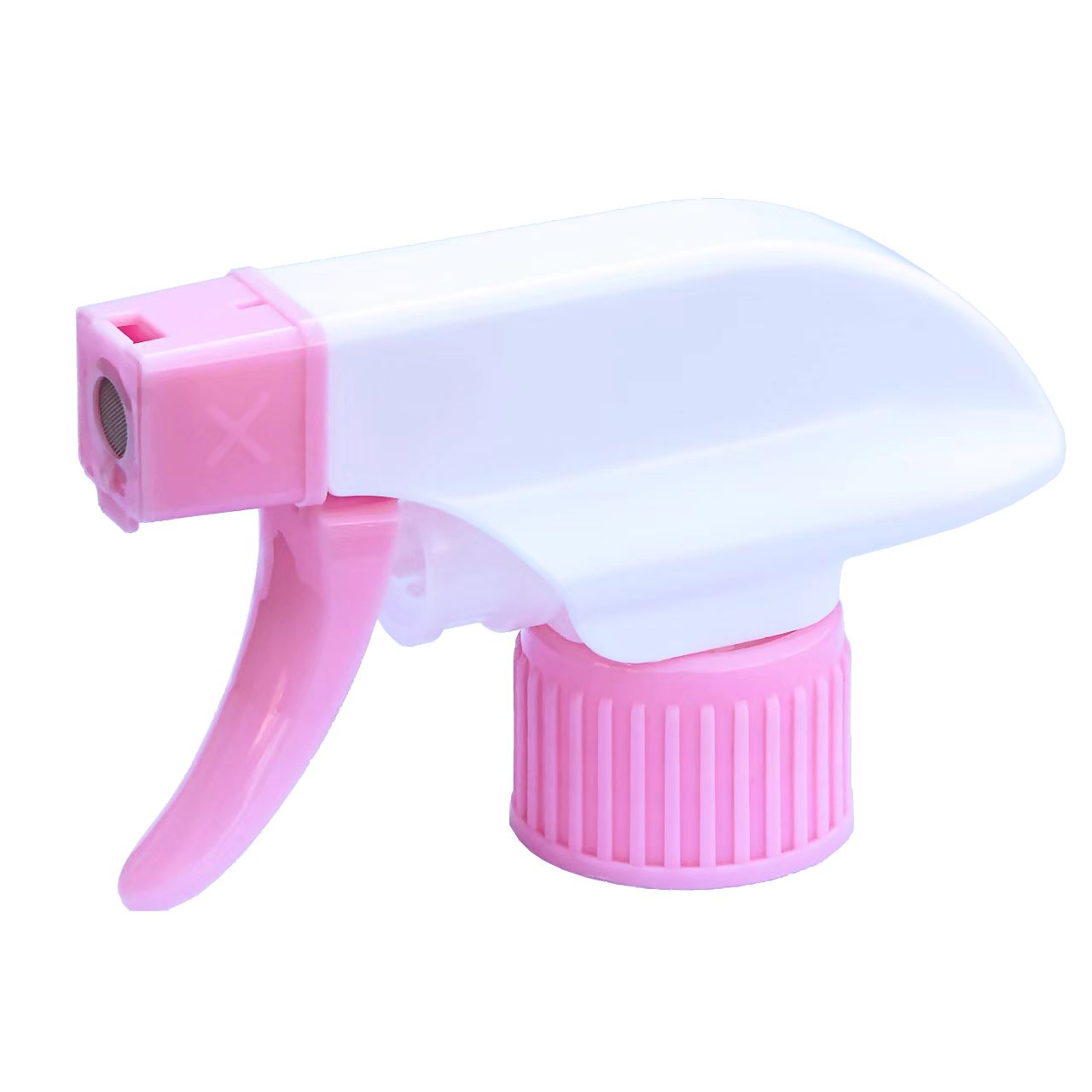
Figure 1: ML-101G1 all-plastic trigger sprayer — single-cover foam version, PP body, trigger and nozzle, with no metal spring in the assembly.
Problem Definition: Three Ambiguities That Decide Whether a Sprayer Is Really All-Plastic
Most specification errors in this category come from three words used loosely: plastic, PP and 28. Each one hides a decision that has to be settled before the price is meaningful.
Ambiguity 1 — “plastic” is not the same claim as “all-plastic”
A conventional trigger sprayer is mostly plastic and still contains metal, typically a steel return spring inside the pump housing. That unit is legitimately described as a plastic trigger sprayer. It is not an all-plastic one. For a brand owner writing a packaging specification, the difference decides whether the closure can be counted as a single-material component at all, and whether the part must be dismantled before it enters a plastic recycling stream.
Ambiguity 2 — “PP” is not the same claim as “mono-material PP”
Polypropylene can appear in a bill of materials while other polymers, and metal, remain elsewhere in the assembly. Mono-material PP is the stricter statement: the plastic content of the sprayer is PP, with no second polymer family to separate. Buyers who need the stricter version should ask for it in those exact words, and ask the supplier to confirm in writing that no metal spring or other metal part sits inside the unit, rather than accepting “PP” as shorthand.
Ambiguity 3 — neck diameter and thread finish are two separate checks
“28” refers to a 28 mm nominal neck, but 28/400 and 28/410 are different thread finishes and should not be assumed interchangeable on the same bottle. The 28/410 neck size is identified by Houweling Group as the most commonly used opening for trigger sprayers, which is why it dominates quotations — but a quotation that lists only “28 mm” leaves the actual finish unresolved. MILA’s all-plastic models are listed with both 28/400 and 28/410 thread sizes.
Industry Background: Why Mono-Material Construction Is Being Discussed More Often
The trigger sprayer category is mature; the material conversation around it is not.
- Fortune Business Insights values the global trigger sprayer market at USD 491.8 million in 2025 and projects a 4.7% CAGR from 2026 to 2034.
- Published estimates for the same category differ by scope: narrower figures count the sprayer closure, larger figures include the complete bottle assembly. The number a buyer sees therefore reflects what was counted as much as how the market is performing.
- In Europe, the Packaging and Packaging Waste Regulation (PPWR), adopted in April 2024, mandates 30% recycled content in plastic packaging by 2030 — a requirement that pushes brand owners to look at what is inside a closure, not only at what the bottle is made of.
- Trigger sprayers sit under HS code 392350, “stoppers, lids, caps and other closures, of plastics”, which is the classification used when the part crosses a border as a standalone closure rather than as part of a filled bottle.
On the supply side, the category is served both by large closures groups and by specialist injection moulders. MILA Plastic Industry runs 60 injection moulding machines and 20 automatic production lines across a plant of more than 30,000 ㎡, employs 300–400 people including 10 engineers, and exports 70%–80% of output to markets that include South America, Western Europe, Eastern Europe, East Asia, Southeast Asia, the Middle East, Africa and Oceania. In-house mould making alongside moulding capacity is what allows a mono-material design to stay consistent over a long production run: the tolerances between trigger, pump and nozzle are held by the same team that cuts the tool.
Detailed Solution: How an All-Plastic Mono-Material PP Trigger Sprayer Is Built
Polypropylene across the assembly
In MILA’s all-plastic range the declared material is PP and the declared construction is all-plastic. Parts that would conventionally be split across materials — housing, trigger, nozzle and internal pump elements — are brought into one polymer family. The consequence at end of life is that the sprayer behaves as a single material rather than a composite requiring separation first. The consequence in production is less forgiving: every one of those parts has to be toleranced so the assembly still actuates smoothly in PP, which is where tooling discipline and process control matter more than the name on the material certificate.
What “no metal spring” actually changes
A trigger sprayer must return to its rest position after each press. In a conventional design that return force comes from a metal spring inside the pump housing. In an all-plastic design the return action is produced by a moulded plastic element instead, so the metal leaves the assembly entirely. This gives buyers the single most useful verification question in the category: not “is it plastic?” but “is there a metal spring, metal ball or other metal part inside?” The all-plastic construction is also patented: MILA holds Chinese utility model patent ZL202321149508.9, “All-plastic trigger sprayer”, issued 28 November 2023 by the China National Intellectual Property Administration and valid to 15 May 2033.
Manual trigger operation: where mist and foam diverge
Every sprayer in this category is hand-operated. The user presses the trigger, the pump chamber is charged, and liquid is forced out through the nozzle. What differs between models is the nozzle and valve arrangement at the exit, which determines whether the product leaves as a fine mist or as a foam.
- Mist output suits jobs where a thin, even film is wanted. Glass and window cleaner is the clearest case, and kitchen degreasers are commonly sprayed the same way.
- Foam output suits jobs where the product should sit on the surface instead of running off. Bathroom and toilet cleaners are the typical example.
Because the difference sits at the front end of the sprayer, mist and foam versions can share the same body, thread and outer cap style. MILA’s all-plastic range makes that explicit: ML-101G1 is foam and ML-101G2 is mist, both with a single-cover outer cap; ML-102B1 is foam and ML-102B2 is mist, both with a double cover.
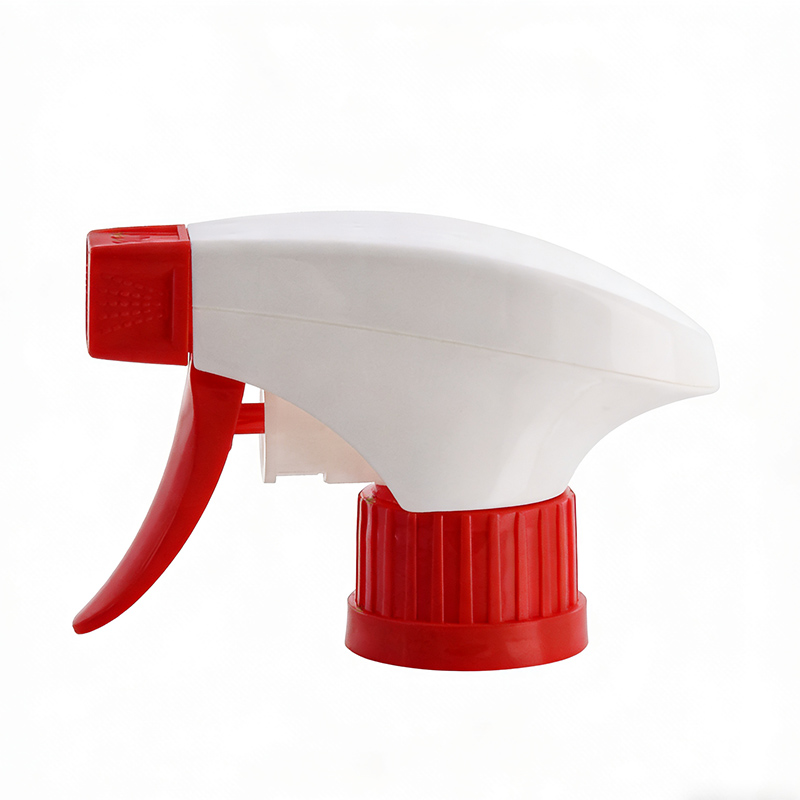
Figure 2: ML-102B2 — the mist version of the double-cover all-plastic body, sharing thread and cap geometry with the foam model ML-102B1.
The bottle interface: 28/400 and 28/410
Thread fit is settled before spray performance is discussed, because a sprayer that does not seat correctly on the bottle never reaches the performance question. Both finishes are 28 mm nominal and differ in thread design. All four MILA all-plastic models — ML-101G1, ML-101G2, ML-102B1 and ML-102B2 — are listed with thread sizes 28/400 and 28/410 and fit bottle necks in both finishes. The evaluation discipline is to match the finish to the bottle actually being filled and to confirm it on a sample, not on a drawing.
Documented proof behind the claim
Material claims are easier to accept when they can be traced. MILA holds ISO 9001:2015 and ISO 14001:2015 certification and SGS compliance, and quality control follows 100% test procedures on production output. Beyond the all-plastic patent, four related utility model patents cover the trigger sprayer family: ZL202321149516.3 (lockable trigger sprayer, issued 8 September 2023), ZL202321038643.6 (adjustable angle trigger sprayer, issued 12 September 2023), ZL202321038645.5 (locking function trigger sprayer, issued 28 November 2023) and ZL202321349188.1 (nozzle protection structure trigger sprayer, issued 28 November 2023). All were issued by the China National Intellectual Property Administration.

Figure 3: Utility model patent ZL202321149508.9, “All-plastic trigger sprayer”, issued by the China National Intellectual Property Administration.
Where the parts come from
Material and patent claims ultimately rest on production control. MILA’s moulding area runs automatic injection moulding, automatic assembly and in-house mould manufacturing as one chain, which is the arrangement that keeps a mono-material design stable from tool to shipped carton rather than only on the first sample.
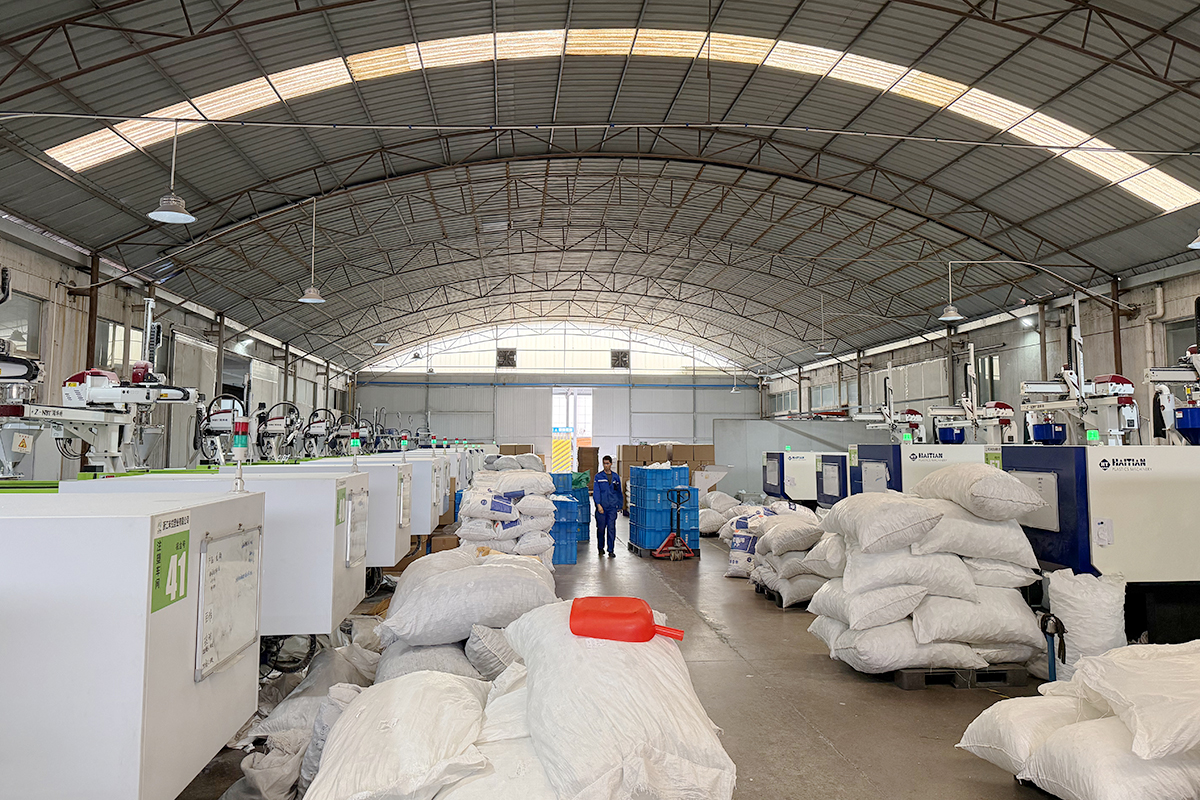
Figure 4: Automatic injection moulding area where PP trigger sprayer components are produced.
Step-by-Step Breakdown: Specifying a Mono-Material PP Trigger Sprayer
The sequence below follows the order in which each decision constrains the next. Skipping a step usually means re-quoting later.
- Write the material claim in the exact words you need. If the requirement is a single-material closure, specify “all-plastic, mono-material PP, no metal spring” and ask for written confirmation. If a mixed-material unit is acceptable, say so — it widens the sourcing field and usually shortens the timeline.
- Fix the neck finish against the bottle you are filling. Decide 28/400 or 28/410 before comparing prices. The 28/410 finish is identified by Houweling Group as the most commonly used opening for trigger sprayers, so availability is usually easier in that finish — but availability is not the same as fit.
- Choose the spray pattern, then the cap style. Pattern follows product behaviour (mist for film-forming sprays such as glass cleaner, foam for clinging cleaners such as toilet products). Cap style follows pack design: MILA pairs single cover with ML-101G1/ML-101G2 and double cover with ML-102B1/ML-102B2.
- Confirm the supply parameters that drive your project plan. For OEM and ODM production, MILA’s minimum order quantity is 50,000 pieces per order, the typical production lead time is 7 days, and monthly capacity is 10,000,000 pieces. Customization covers colour, logo and caliber.
- Validate before committing to volume. Test the specified model on your own bottle in your own fill, against the 100% test discipline the factory applies to production output, and check the supply record behind the quotation.
Use Cases: Where All-Plastic PP Trigger Sprayers Fit
MILA’s all-plastic models list the same application set — household kitchen degreaser, bathroom and toilet cleaner, glass and window cleaner, car care and auto detailing — and the same industries: household cleaning, commercial cleaning and janitorial service, auto care and car detailing, pet supplies, and chemical and daily-use chemical products. Read together, these describe four distinct buying situations.
- Household cleaning brands need a matched pair more often than a single SKU: a mist unit for glass and surface sprays beside a foam unit for bathroom and toilet cleaners, sharing the same cap styling so the range looks like a range on shelf.
- Commercial cleaning and janitorial suppliers buy for refill and reuse cycles rather than one-time use, which makes the reusable service life recorded in MILA’s Egypt project — 2 to 5 years — the relevant figure rather than the unit price alone.
- Auto care and detailing sits in the same application list, where a mist pattern is used for spray-on, wipe-off products applied to panels, glass and trim.
- Pet supplies and chemical products extend the same closure into adjacent categories where the buyer wants one trigger platform across several lines instead of a different head for each.
A concrete supply reference: in Egypt, MILA supplied 5,000,000 pieces of trigger sprayers to a trading company and a finished-goods packaging manufacturer serving the Middle East and Africa market. The recorded outcome is stable product quality and satisfied customer feedback, leading to repeated continuous orders, with reliable quality and stable supply capacity listed as the highlights of the case. For a buyer at evaluation stage, that pattern — repeat orders rather than a single large shipment — is the part worth reading.
Comparison Table: MILA All-Plastic PP Trigger Sprayer Models
| Model | Material | Spray output | Outer cap | Thread size | Documented applications |
|---|---|---|---|---|---|
| ML-101G1 | All-plastic PP | Foam | Single cover | 28/400, 28/410 | Kitchen degreaser, bathroom & toilet cleaner, glass & window cleaner, car care & auto detailing |
| ML-101G2 | All-plastic PP | Mist | Single cover | 28/400, 28/410 | Kitchen degreaser, bathroom & toilet cleaner, glass & window cleaner, car care & auto detailing |
| ML-102B1 | All-plastic PP | Foam | Double cover | 28/400, 28/410 | Kitchen degreaser, bathroom & toilet cleaner, glass & window cleaner, car care & auto detailing |
| ML-102B2 | All-plastic PP | Mist | Double cover | 28/400, 28/410 | Kitchen degreaser, bathroom & toilet cleaner, glass & window cleaner, car care & auto detailing |
Two details in that table carry more weight than the rest. The material column is identical across all four models, so the choice is never about material — it is about output and cap style. And foam and mist appear twice each, once in single cover and once in double cover, which means a brand that has already fixed its outer cap styling can still change spray pattern without changing the visual identity of the pack.
Design comparison: mono-material all-plastic vs conventional metal-spring construction
| Design point | All-plastic mono-material PP | Conventional metal-spring trigger sprayer |
|---|---|---|
| Material composition | All plastic parts declared as PP | Predominantly plastic with separate polymer and metal components |
| Metal content | No metal return spring in the assembly | Metal return spring inside the pump housing |
| Return action | Provided by a moulded plastic element | Provided by the metal spring |
| End-of-life handling | Presents one material stream; no separation of metal required | Requires separation of the metal spring before plastic recovery |
| Specification check | Confirm absence of metal parts in writing | Confirm which metal parts are present and where |
Frequently Asked Questions
Are all-plastic PP trigger sprayers affected by packaging rules such as the EU PPWR?
Yes, where the sprayer is placed on the EU market as part of a plastic pack. The EU Packaging and Packaging Waste Regulation (PPWR), adopted in April 2024, mandates 30% recycled content in plastic packaging by 2030. Construction matters here: a mono-material PP sprayer with no metal spring presents one material stream to a recycler instead of a composite that has to be broken down first. Documentation still has to be assembled per project — MILA holds ISO 9001:2015 and ISO 14001:2015 certification and SGS compliance, and trigger sprayers are classified under HS code 392350 — and any recycled-content claim printed on pack should be confirmed with your own compliance team.
Which model should I shortlist: single cover or double cover, mist or foam?
Decide the spray pattern from product behaviour first, then the cap style from pack design. In MILA’s all-plastic range, ML-101G1 is foam and ML-101G2 is mist with a single-cover outer cap; ML-102B1 is foam and ML-102B2 is mist with a double cover. All four are declared all-plastic PP and fit both 28/400 and 28/410 bottle necks, so the thread finish does not narrow the shortlist — only the output and cap style do.
What order size does an all-plastic PP trigger sprayer project require?
For OEM and ODM production, MILA’s minimum order quantity is 50,000 pieces per order, with a monthly capacity of 10,000,000 pieces and a typical production lead time of 7 days. Customization covers colour, logo and caliber. In practice the order quantity, not the lead time, is the binding constraint for a new project: 7-day production is short enough that the schedule is usually set by bottle availability, artwork approval and sample sign-off rather than by sprayer output.
How do buyers validate the all-plastic claim before bulk production?
Run three checks. First, ask for written confirmation that the assembly contains no metal spring or other metal part, and match it to the model you ordered. Second, test the sample on your own bottle in the thread finish you specified, because fit is decided at the neck rather than on a drawing. Third, review the quality regime behind the quotation — MILA applies 100% test procedures on production output. Buyers can request samples and a quotation directly from the factory: Bruce Liu, email 18858002300@163.com, tel +86 188-5800-2300, or WhatsApp via +86 180-6742-7651.
Can an all-plastic PP trigger sprayer be supported over repeat orders?
The recorded supply pattern suggests yes. The Egypt project supplied 5,000,000 pieces to a trading company and finished-goods packaging manufacturer and resulted in repeated continuous orders, with the product listed at a reusable service life of 2 to 5 years that supports long-term supply programmes. Capacity supporting that pattern is 10,000,000 pieces per month with a 7-day typical production lead time, against an annual factory output above 600 million pieces. After-sales terms are specific rather than general: if a large number of products in a batch have non-human quality problems, MILA supports returns or exchanges.
Conclusion: Define the Material Claim Before You Compare Prices
An all-plastic trigger sprayer is defined by what it does not contain. The absence of a metal return spring, combined with a PP-only plastic content, is what separates a mono-material PP sprayer from the broader and much larger group of plastic trigger sprayers that still carry metal inside the pump housing. Everything else — mist or foam, single cover or double cover, 28/400 or 28/410 — is a selection decision made after that definition is settled.
For buyers at evaluation stage, the working order is straightforward: state the material claim precisely, fix the neck finish against the bottle, choose the spray pattern from how the product behaves on the surface, confirm the order size against the 50,000-piece MOQ and 7-day lead time, and validate on a sample before volume. Buyers who follow that order rarely discover a material problem after the artwork has been printed.
Request an all-plastic PP trigger sprayer sample or quotation
MILA Plastic Industry supplies all-plastic PP trigger sprayers in foam and mist versions, single and double cover, in 28/400 and 28/410, with OEM and ODM customization of colour, logo and caliber. Share your bottle neck finish, spray pattern and annual volume to receive a matched sample and quotation.
Bruce Liu · Email: 18858002300@163.com · Tel / WhatsApp / WeChat: +86 188-5800-2300
Website: www.triggerssprayer.com · Address: 1# Panlong South Road, Donggang Development Zone, Kecheng Area, Quzhou City, Zhejiang Province, China
Figure 5: Contact channel for sample and quotation requests.
Have Questions or Need More Details?
Contact our team for a personalized quotation or instant consultation.
Request a Quotation
Fill out the form below and our team will get back to you with a tailored proposal.
WhatsApp Direct Chat
Prefer to chat in real-time? Message us on WhatsApp for instant assistance & quick answers.
- Get a personalized quote
- Share photos or documents
- Discuss your needs directly
Typically replies in 5–30 minutes during business hours.