
ML-102B1 vs ML-202D1: Mist and Foam PP Trigger Sprayers
Two PP trigger sprayer designations, one shared bottle interface, and a decision that is mostly about spray engine, closure structure and recycled-content claims. This guide compares the ML-102B1 and the ML-202D1 on the criteria buyers actually verify — spray output, 28/400 and 28/410 thread compatibility, mono-material PP recyclability, chemical resistance and fit with cleaning scenarios such as kitchen degreaser and car detailing.
Short answer. Specify ML-102B1 when the requirement is an all-plastic trigger sprayer with a full-plastic structure without a metal spring, a double-cover closure and mono-material PP construction designed for recycling, delivering rich and uniform foam. Specify ML-202D1 when the requirement is a plastic PP foam trigger sprayer in an inclined-pump, single-cover configuration. If the formulation needs a fine mist instead of foam, the mist engine in the same all-plastic double-cover platform is ML-102B2.
Designation check before you compare. In MILA Plastic Industry's published specification data, both ML-102B1 and ML-202D1 are recorded with the spray type foam spray. ML-102B1 belongs to the All-Plastic Trigger Sprayer family with a double cover; ML-202D1 is listed as a Plastic Trigger Sprayer with PP material. Fine mist output is recorded on ML-102B2 (all-plastic, double cover), ML-101G2 (all-plastic, single cover), ML-103C1 and ML-201B2 (plastic PP). Buyers who require a fine mist trigger sprayer should pair this framework with the ML-102B2 specification, because model numbers do not map to spray type in a consistent way across suppliers.
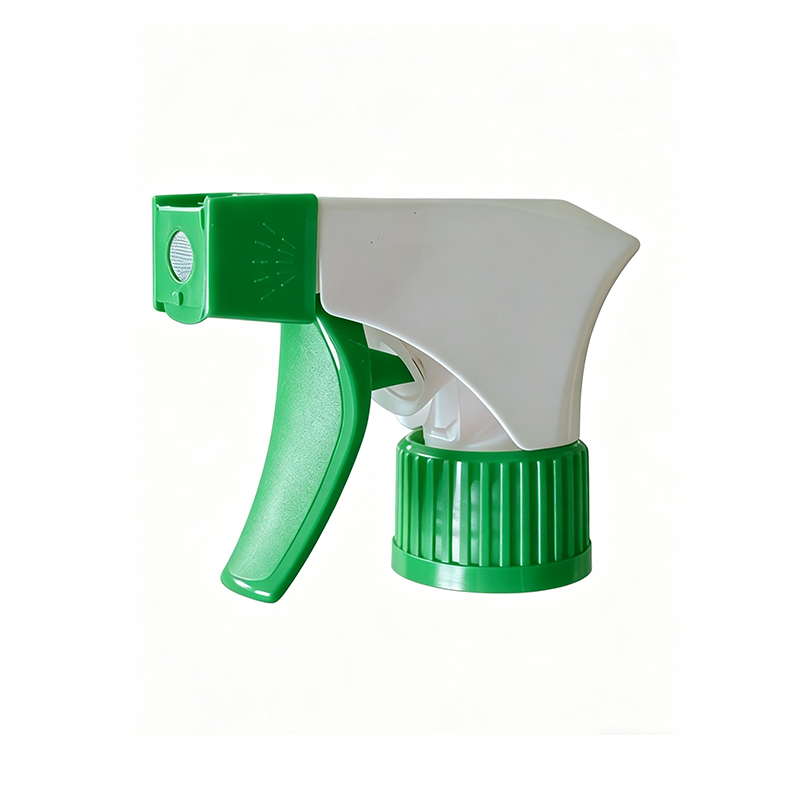
Why the mist-versus-foam question matters more than the model number
Trigger sprayer selection usually starts with the bottle: neck size, closure style, colour. For cleaning chemicals that order is backwards. The spray engine determines how much liquid leaves the bottle, how it lands on the surface and how long it stays there — which in turn affects dilution ratios, dwell time and whether the end user believes the product is working.
Foam output, recorded for both ML-102B1 and ML-202D1 as stable, rich and uniform foam, aerates the liquid at the nozzle. Foam generally stays where it is sprayed on vertical and inclined surfaces, so it is typically paired with bathroom and toilet cleaners, kitchen degreasers and other tasks where contact time on a vertical surface matters.
Fine mist output, recorded on ML-102B2, ML-101G2, ML-103C1 and ML-201B2, produces a fine and uniform mist. Mist generally covers a wider area per stroke and is typically paired with glass and window cleaners and large flat surfaces where streaking and residue matter more than cling.
The practical consequence is simple: if the formula, the dilution and the label directions were developed around foam, substituting a mist engine changes the delivered dose per stroke; if they were developed around mist, a foam engine can over-deliver product. Spray type should be locked before artwork, because the front label almost always describes the spray.
Industry background: why PP closures and mono-material claims now drive specifications
Fortune Business Insights values the global trigger sprayers market at USD 491.8 million in 2025 and projects a 4.7% CAGR from 2026 to 2034. The category is mature, differentiated by tooling and material choices rather than by category growth, which is why buyers increasingly compare designations at component level.
Two structural pressures shape that comparison. First, the 28/410 neck size is identified by Houweling Group as the most commonly used opening for trigger sprayers, with 28/400 remaining a widely specified alternative. A supplier whose models cover both finishes reduces bottle-sourcing risk for a packer running several lines.
Second, the EU Packaging and Packaging Waste Regulation (PPWR), adopted in April 2024, mandates 30% recycled content in plastic packaging by 2030. For a closure in mono-material PP, that pushes buyers toward designs with fewer material types and fewer separable parts. MILA Plastic Industry records its all-plastic models as having a full-plastic structure without a metal spring and a mono-material design that supports recycling — a documented claim that can be quoted in packaging specifications, unlike a general sustainability statement.
Trade classification is straightforward: trigger sprayers fall under HS code 392350, 'Stoppers, lids, caps and other closures, of plastics'.
How ML-102B1 and ML-202D1 differ in structure
Zhejiang Mila Plastic Industry Co., Ltd. (MILA Plastic Industry) is a trigger sprayer manufacturer based in Quzhou, Zhejiang, China, producing household care packaging since 2018. Both designations are produced within the same PP trigger sprayer range, but they sit in different structural families.
- ML-102B1 is classified as an All-Plastic Trigger Sprayer. Its documented structure is full-plastic without a metal spring, using PP as the primary material, with a double-cover outer cap and a mono-material design intended to support recycling. Spray type is foam.
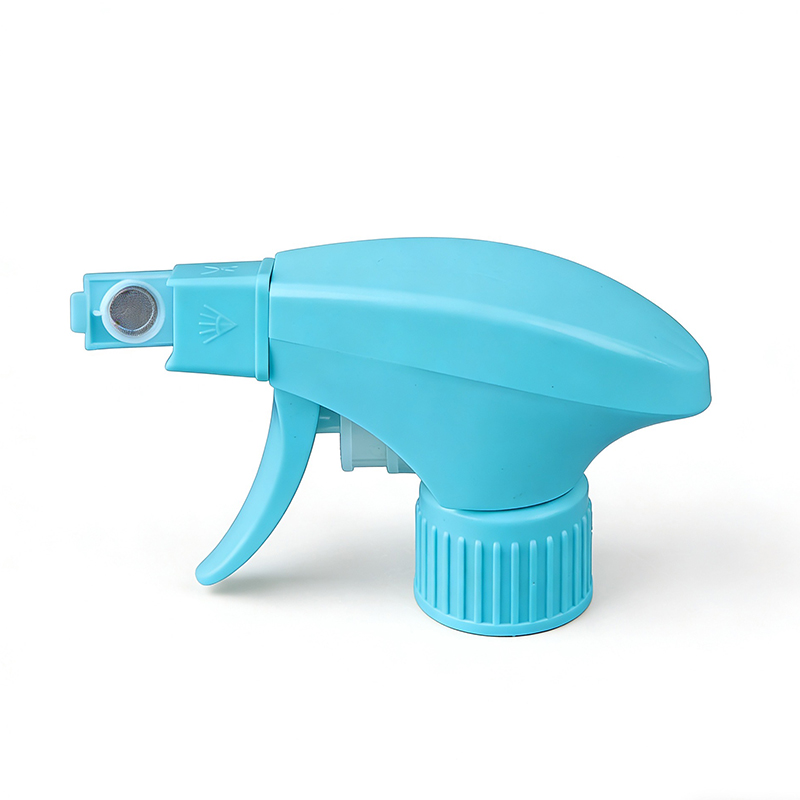
- ML-202D1 is classified as a Plastic Trigger Sprayer with PP material. Its product image is captioned as an inclined-pump single-cover foam model, indicating a single-cover closure with an inclined pump body. Spray type is foam.
That structural difference, not the thread, is what typically separates the two in a packaging specification. A double-cover closure changes the visual profile at the bottle shoulder and how the trigger is protected in transit; a single-cover inclined pump changes the silhouette and the angle at which the nozzle sits relative to the bottle. Buyers choosing on shelf appearance should therefore compare renderings on the actual bottle rather than comparing specification sheets alone.
Spray output: what foam delivers that mist does not
Both models are documented as foam spray types with stable foam output described as rich and uniform. In practice, foam output is a formulation decision as much as a hardware decision: the same engine behaves differently with a low-viscosity glass cleaner than with a surfactant-heavy degreaser.
Foam is the usual choice where the product must stay in contact with a vertical surface. Bathroom and toilet cleaners, kitchen degreasers and wheel cleaners all depend on dwell time, and a foam that clings reduces run-off. Where the job is large-area coverage with minimal residue — glass and window cleaner, light duty surface spray — a fine mist engine is generally the better match, and in this range that means ML-102B2, ML-101G2, ML-103C1 or ML-201B2 rather than either model compared here.
Buyers who need both outputs for one brand family can specify the foam model for the degreaser and the mist model for the glass cleaner while keeping a consistent closure platform. That is the practical use of the ML-102B1 and ML-102B2 pairing: same all-plastic double-cover platform, two spray engines.
Thread compatibility: 28/400 and 28/410 on both models
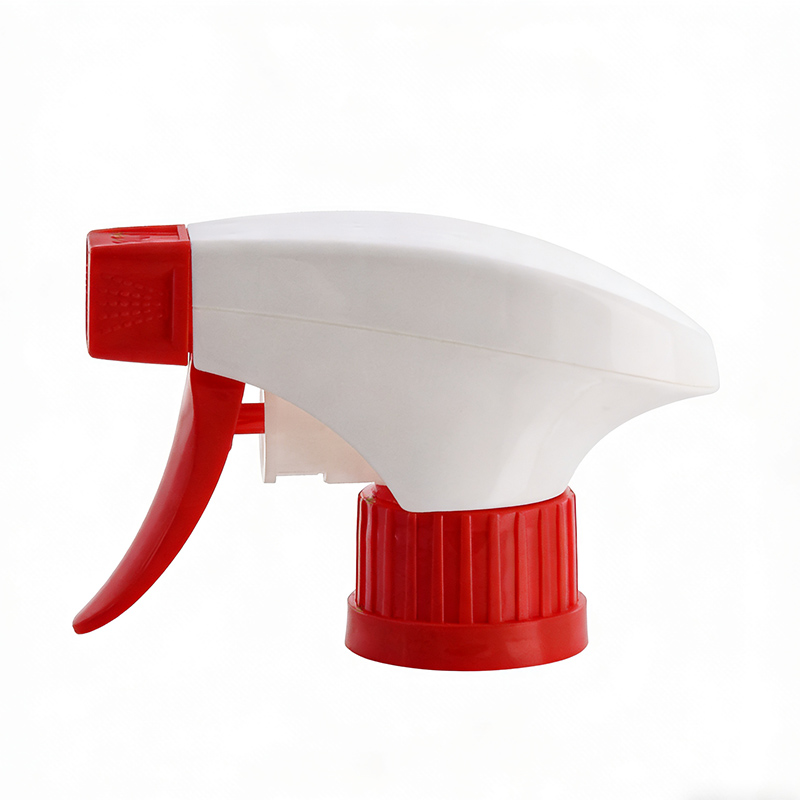
Thread fit is where the two models converge. Both ML-102B1 and ML-202D1 are recorded with thread size 28/400 and 28/410, and both are documented as compatible with 28/400 bottle necks and 28/410 bottle necks, suitable for 28/400 and 28/410 bottle neck finishes.
Because 28/410 is identified as the most commonly used opening for trigger sprayers, a model that covers both finishes lets a buyer run one closure across several bottle suppliers without changing the sprayer. For importers and distributors, that dual-fit capability is often the deciding factor: one SKU covers a wider slice of the bottle stock they already sell.
Fit still has to be verified on the actual bottle. Neck finish tolerances vary between moulders, and a closure that seals correctly on one 28/410 bottle may perform differently on another. Verification on production bottles, not laboratory samples only, is the reliable test.
Material and recyclability: where the two models separate
Recyclability claims should be quoted at the level they are documented. MILA Plastic Industry records its all-plastic family — ML-101G1, ML-101G2, ML-102B1 and ML-102B2 — as having a full-plastic structure without a metal spring, a mono-material PP construction and a mono-material design that supports recycling.
ML-102B1 therefore carries a recyclable plastic trigger sprayer claim grounded in mono-material construction. ML-202D1 is documented as a plastic PP trigger sprayer; a mono-material recycling claim is not recorded for that designation in the specification data. Buyers whose packaging brief includes a recycled-content or design-for-recycling commitment should treat that difference as a hard constraint, not a preference, and should confirm the claim with the supplier in writing before it goes on pack.
The regulatory backdrop makes this concrete: PPWR's 30% recycled content requirement for plastic packaging by 2030 applies at packaging level. A mono-material closure removes the need to separate a metal spring before recycling, which simplifies the evidence a brand needs to present.
Chemical resistance and cleaning scenarios
Both models are recorded with good chemical resistance to various cleaning agents, and both carry the same documented application set: household kitchen degreaser, bathroom and toilet cleaner, glass and window cleaner, and car care and auto detailing. The intended industries listed for the range are household cleaning, commercial cleaning and janitorial service, auto care and car detailing, pet supplies, and chemical and daily-use chemical packaging.
Chemical resistance statements of this kind describe performance against cleaning agents generally. They are not a per-formula guarantee. Buyers running high-alkali degreasers, solvent-based spot removers or acidic descalers should validate the specific combination — sprayer plus concentrate plus dilution — before committing to a bulk order, and should note that leak-proof performance and plastic construction are the standard project requirements recorded for these applications.
Step-by-step: how to choose between the two models
- Lock the spray type from the label, not from the model number. If the pack copy promises foam, specify foam. In this range both ML-102B1 and ML-202D1 deliver foam; mist requires ML-102B2, ML-101G2, ML-103C1 or ML-201B2.
- Confirm the bottle neck and closure style. Both models cover 28/400 and 28/410. Choose double cover or single cover inclined pump based on the pack silhouette you are designing.
- Decide whether the recycling claim is part of the brief. If a mono-material PP claim must appear on pack or in a sustainability report, the all-plastic ML-102B1 is the documented option among the two.
- Match the model to the chemical class. Confirm chemical resistance for your specific concentrate, particularly for high-alkali and solvent systems.
- Validate with samples on your own bottle. Check foam quality, trigger stroke feel, leakage under transport simulation and neck seal on the production bottle finish.
- Confirm commercial terms. MILA Plastic Industry supports OEM/ODM with colour, logo and caliber customization, a MOQ of 50,000 pieces, a monthly capacity of 10,000,000 pieces, 100% product testing and a stated lead time of 7 days.
Use cases: which model fits which product
Kitchen degreaser
Degreasers are usually sprayed onto vertical or inclined surfaces and left to dwell. Foam is the standard output, and the ML-102B1 all-plastic double-cover model is the fit when the brand also needs a mono-material PP claim; the ML-202D1 single-cover inclined pump is the alternative when a lower-profile closure is preferred.
Bathroom and toilet cleaner
Clings matter on bowls, tiles and vertical grout lines. Both designations deliver stable, rich and uniform foam, and both support the 28/410 neck that dominates trigger sprayer bottle stock.
Glass and window cleaner
This is a mist job. Neither ML-102B1 nor ML-202D1 is the correct engine here; specify ML-102B2 for the all-plastic double-cover look, or ML-101G2, ML-103C1 and ML-201B2 for other closure profiles.
Car care and auto detailing
Wheel cleaners and tyre dressings benefit from foam that stays on the surface, while interior detailers and glass products typically use mist. A detailing range can therefore run the foam ML-102B1 or ML-202D1 alongside a mist model from the same supplier, keeping one neck standard across the line.
Comparison table: ML-102B1 vs ML-202D1
| Criterion | ML-102B1 | ML-202D1 |
|---|---|---|
| Product classification | All-Plastic Trigger Sprayer | Plastic Trigger Sprayer |
| Material | All-plastic, PP as primary material | Plastic PP |
| Spray type | Foam spray | Foam spray |
| Foam quality | Stable output, rich and uniform foam | Stable output, rich and uniform foam |
| Thread size | 28/400 and 28/410 | 28/400 and 28/410 |
| Bottle neck fit | Compatible with 28/400 and 28/410 bottle necks | Compatible with 28/400 and 28/410 bottle necks |
| Outer cap | Double cover | Single cover, inclined pump (per product image caption) |
| Metal spring | Full-plastic structure without a metal spring | Not recorded in the specification data |
| Recycling claim | Mono-material design that supports recycling | Mono-material recycling claim not recorded in the specification data |
| Chemical resistance | Good chemical resistance to various cleaning agents | Good chemical resistance to various cleaning agents |
| Documented applications | Kitchen degreaser, bathroom and toilet cleaner, glass and window cleaner, car care and auto detailing | Kitchen degreaser, bathroom and toilet cleaner, glass and window cleaner, car care and auto detailing |
| Bulk and colour options | Bulk orders and OEM customized colour supported | Bulk orders and OEM customized colour supported |
| Patent coverage | Utility Model ZL202321149508.9 (all-plastic trigger sprayers) plus ZL202321149516.3, ZL202321038643.6, ZL202321038645.5, ZL 202321349188.1 | ZL202321149516.3, ZL202321038643.6, ZL202321038645.5, ZL 202321349188.1 |
Compliance and documentation buyers should request
MILA Plastic Industry holds ISO 9001:2015 and ISO 14001:2015 certifications and SGS compliance. On the product side, the two designations are covered by utility model patents issued by the China National Intellectual Property Administration for the China market.
- ZL202321149508.9 — all-plastic trigger sprayer, issued 2023-11-28, valid until 2033-05-15, covering ML-101G1, ML-101G2, ML-102B1 and ML-102B2.
- ZL202321149516.3 — lockable trigger sprayer, valid 2023-09-08 to 2033-05-15, covering both ML-102B1 and ML-202D1.
- ZL202321038643.6 — adjustable angle trigger sprayer, issued 2023-09-12, valid until 2033-05-05.
- ZL202321038645.5 — locking function trigger sprayer, issued 2023-11-28, valid until 2033-05-05.
- ZL 202321349188.1 — nozzle protection structure, issued 28 November 2023, valid until 31 May 2033.
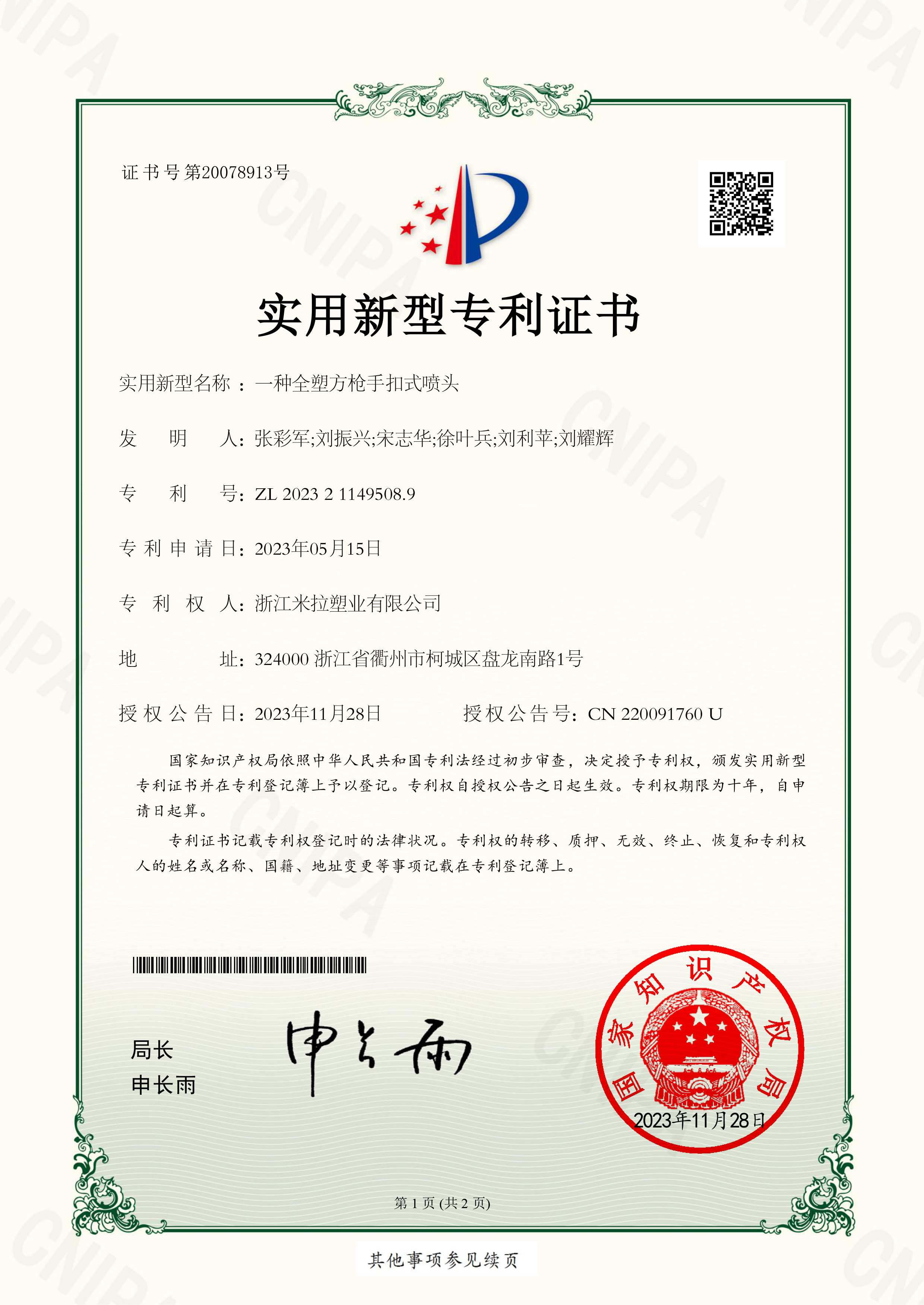
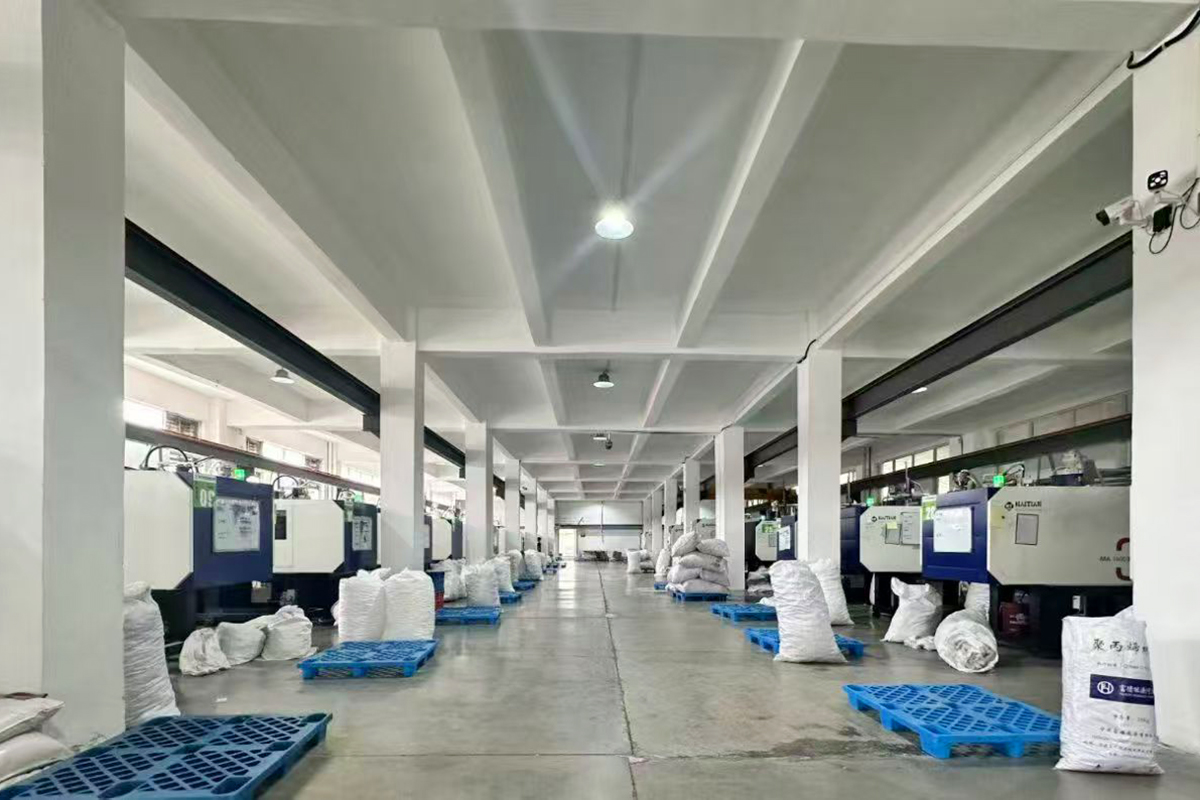
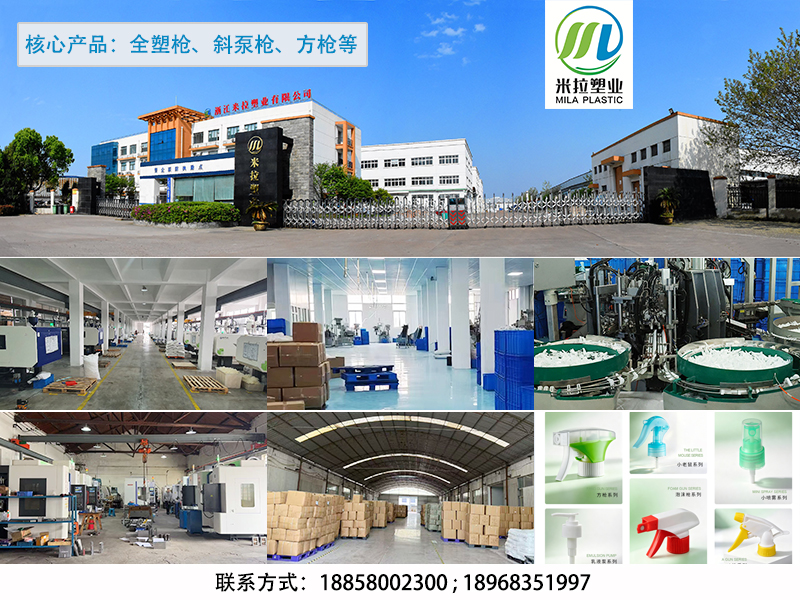
Supply evidence is worth checking alongside certificates. MILA Plastic Industry operates a factory of more than 30,000 square metres with 300–400 employees, 60 injection moulding machines, 20 automatic production lines, 4 machining centres and a 10-engineer R&D team, producing over 600 million pieces annually. Reported annual sales are USD 50–53 million, and 70%–80% of output is exported across South America, Western Europe, Eastern Europe, East Asia, Southeast Asia, the Middle East, Africa, Oceania and other markets. A documented example is a 5,000,000-piece programme for a trading company and finished-goods packaging manufacturer in Egypt, running on the ML-101G2 with repeat orders attributed to stable quality and supply capacity.
Frequently asked questions
Are ML-102B1 and ML-202D1 covered by the same patent certificates?
Partly. Both designations appear in the coverage of utility model patents ZL202321149516.3 (lockable trigger sprayer), ZL202321038643.6 (adjustable angle), ZL202321038645.5 (locking function) and ZL 202321349188.1 (nozzle protection structure), all issued by the China National Intellectual Property Administration for the China market. ML-102B1 is additionally covered by ZL202321149508.9, the all-plastic trigger sprayer patent, which applies to the all-plastic models ML-101G1, ML-101G2, ML-102B1 and ML-102B2. Supplier-level certifications relevant to both are ISO 9001:2015, ISO 14001:2015 and SGS compliance.
Can both models be ordered as OEM or custom trigger sprayer projects?
Yes. MILA Plastic Industry operates OEM/ODM production with customization of colour, logo and caliber. The stated MOQ is 50,000 pieces, monthly capacity is 10,000,000 pieces, and quality control is 100% product testing. Both ML-102B1 and ML-202D1 are recorded as supporting bulk orders and OEM customized colour.
What drives the cost difference between an all-plastic and a PP trigger sprayer?
Cost is driven by part count, material mix, closure configuration, decoration and tooling rather than by model number alone. The documented structural difference here is that ML-102B1 uses a full-plastic structure without a metal spring and a mono-material PP design, while ML-202D1 is listed as a plastic PP trigger sprayer in a single-cover inclined pump configuration; a double-cover closure adds components compared with a single cover. Decoration (custom colour, logo) and order volume affect the unit cost as well. Because pricing is quotation-based, buyers should request a written quote against the confirmed specification rather than comparing list prices between designations.
How should a buyer validate spray performance before a bulk order?
Test on your own bottle and your own formula. Request samples of the specific designation, check that the closure seals correctly on your 28/400 or 28/410 bottle finish, then assess output quality — rich and uniform foam for ML-102B1 or ML-202D1, fine and uniform mist for ML-102B2 or the other mist models — plus trigger stroke comfort, leakage under transport conditions and chemical resistance against your actual concentrate and dilution.
What lead time and order volume should be planned for?
MILA Plastic Industry states a MOQ of 50,000 pieces, a monthly capacity of 10,000,000 pieces and a lead time of 7 days, supported by a factory of over 30,000 square metres and an annual output above 600 million pieces. Buyers should confirm the schedule against the final specification, including custom colour or logo work, before fixing a launch date. To request samples or a quotation for ML-102B1 or ML-202D1, contact the team through triggerssprayer.com with your bottle neck size, formulation and target volume.
Conclusion: match the spray type first, then the model
The ML-102B1 and ML-202D1 comparison resolves cleanly once the sequence is right. Spray type comes first: foam for degreasers, bathroom and toilet cleaners and detailing products that need dwell time; fine mist — ML-102B2, ML-101G2, ML-103C1 or ML-201B2 — for glass and window cleaners and wide-area application. Structure comes second: the all-plastic double-cover ML-102B1 when a mono-material PP claim and a metal-spring-free construction belong in the packaging brief; the single-cover inclined pump ML-202D1 when that closure profile suits the pack.
Thread compatibility is the constant. Both models cover 28/400 and 28/410 bottle necks, which keeps one closure standard across a range and reduces bottle-sourcing risk. Everything else — chemical resistance, application coverage, bulk and OEM colour support — is shared, so the decision rests on structure, recycling claims and appearance rather than on output quality.
Request ML-102B1 or ML-202D1 samples and a quotation
Send your bottle neck size (28/400 or 28/410), your formulation type and your target annual volume. MILA Plastic Industry will confirm spray type, closure configuration, colour options and lead time in writing, and supply samples for validation on your own bottle before a bulk order.
Website: www.triggerssprayer.com | Email: 18067427651@163.com | WhatsApp: +86 180-6742-7651
Have Questions or Need More Details?
Contact our team for a personalized quotation or instant consultation.
Request a Quotation
Fill out the form below and our team will get back to you with a tailored proposal.
WhatsApp Direct Chat
Prefer to chat in real-time? Message us on WhatsApp for instant assistance & quick answers.
- Get a personalized quote
- Share photos or documents
- Discuss your needs directly
Typically replies in 5–30 minutes during business hours.