
Pet Cleaning Sprays: PP Trigger Sprayers That Fit and Resist
A pet supplies brand or a janitorial team filling cleaning sprays for pet areas usually hits two failures at the filling line: the trigger sprayer does not seat correctly on the bottle neck, or the sprayer stops working after a few weeks in contact with the cleaning agent. The practical answer is to specify a PP trigger sprayer against both constraints at the same time — a thread that matches the bottle (28/400 or 28/410) and a plastic construction that removes the metal part most exposed to aggressive chemistry.
MILA Plastic Industry — the export name of Zhejiang Mila Plastic Industry Co.,Ltd., a sprayer manufacturer founded in 2018 in Quzhou, Zhejiang, China — produces an all-plastic PP trigger sprayer range intended for household, cleaning and pet supplies packaging. The range includes the ML-204Z1 foam trigger sprayer and mist variants from the same series.
This guide is written for buyers at the evaluation-to-execution stage: the formula and the bottle are nearly locked, and the remaining decision is which trigger closes the gap between them.
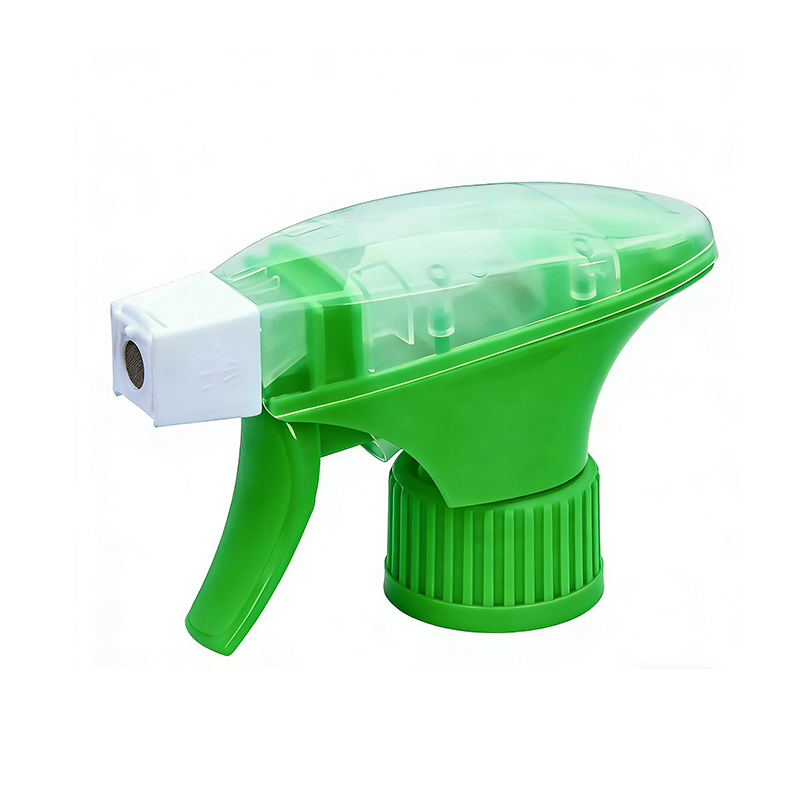
ML-204Z1: an all-plastic PP foam trigger sprayer from MILA Plastic Industry, one of the models specified for pet-area cleaning sprays.
1. Problem Definition: What Actually Fails in a Pet-Area Cleaning Spray
Bottle fit and chemical resistance are usually handled as two separate purchasing items. In practice they fail together, and both failures surface after filling, when the product is already packed and labelled.
- Thread mismatch. 28/400 and 28/410 are two different neck finishes. A sprayer built for one finish, forced onto the other, can cross-thread, sit above the bottle shoulder, or leak slowly during transport.
- Spring corrosion. Conventional trigger sprayers carry a metal spring inside the pump chamber. When a pet-area formula is acidic, oxygen-bleach based or solvent-heavy, that spring is the first component to corrode, and the visible result is discoloured liquid or a seized trigger.
- Output mismatch. A foam product delivered as a mist — or the reverse — reads as a weak product to the end user even when the liquid itself performs as designed.
- Leakage in transit. Without a defined pre-shipment test and acceptance criterion, leakage is discovered by the retailer rather than the factory.
Pet-area cleaning liquids are rarely simple water-based fillers. Formulations in this category typically include odour neutralisers, surfactant-heavy surface cleaners, enzyme-based stain removers and grooming foams, and each places a different load on the sprayer’s internal parts. A trigger that performs well with a neutral cleaner can fail with a more aggressive one, which is why material selection has to be checked against the actual liquid rather than against the category.
Working rule for buyers: confirm the bottle neck finish and run a compatibility test with the real liquid before mass production. Both steps cost far less than a recall of filled bottles.
2. Industry Background: Why the Trigger Is Now the Constraint
The global trigger sprayers market was valued at USD 491.8 million in 2025 and is projected to grow at a compound annual growth rate of 4.7% from 2026 to 2034, according to Fortune Business Insights. Growth of that order keeps pressure on suppliers and brand owners to hold several thread standards and several spray outputs in the same programme, instead of standardising on one generic model.
Among neck finishes, 28/410 is identified by Houweling Group as the most commonly used opening for trigger sprayers. That does not make 28/400 obsolete. Both sizes remain in active use, and a filler working across several bottle suppliers or co-packers normally has to support both.
Two regulatory and trade factors sit alongside pure fit. The EU Packaging and Packaging Waste Regulation (PPWR), adopted in April 2024, requires 30% recycled content in plastic packaging by 2030, which pushes packaging decisions toward mono-material thinking. Separately, trigger sprayers are classified under HS code 3923.50 — stoppers, lids, caps and other closures, of plastics — which is the classification buyers and forwarders will see on shipping documents.
In the pet category, the spray format has moved from kennels and grooming salons onto retail shelves: stain and odour sprays, crate and surface cleaners, coat fresheners, bedding deodorisers and accessory cleaners. Each of those products represents a different trigger specification, even when the bottle silhouette looks identical.
3. Detailed Solution: An All-Plastic PP Trigger Sprayer Matched to Bottle and Formula
MILA Plastic Industry manufactures trigger sprayers on a site of more than 30,000 ㎡ in Quzhou, Zhejiang, with 60 injection molding machines, 20 automatic production lines, 12 precision mold machines and a team of 10 engineers, staffed by 300–400 employees. Annual output exceeds 600 million pieces and monthly trigger sprayer capacity is 10,000,000 pieces. Between 70% and 80% of production is exported to South America, Western Europe, Eastern Europe, East Asia, Southeast Asia, the Middle East, Africa and Oceania.
The manufacturer provides both OEM and ODM production services, with customization options covering color, logo and caliber, which matters for pet brands that need a trigger matched to label colour rather than to a stock black or white closure.
3.1 Bottle fit: 28/400 and 28/410 in the same range
The range supports the two standard trigger sprayer thread sizes: 28/400 and 28/410. For a pet spray project, the sequence is to confirm the bottle neck finish first and order second. The thread should be treated as a fixed project parameter rather than a preference, because a mismatch will not be cured by tightening torque or by a different liner.
The 28/410 finish is the more widely used of the two, which matters at scale-up. If a co-packer or a second bottle supplier is added later, the more common finish is easier to re-source. Projects already tooled on 28/400 bottles can stay on 28/400 without changing sprayer supplier, provided the specification is written correctly on the purchase order.
3.2 Chemical resistance: no metal spring in the full-plastic version
MILA’s trigger sprayers are offered in a full-plastic version and in a non-full-plastic version that uses accessories made of other materials. The full-plastic version adopts an all-plastic structure without a metal spring, which removes the rust risk that corrosive liquids create in conventional triggers. For pet-area cleaners built on acidic, bleach-based or solvent-containing formulas, that is the version to specify.
The construction is covered by utility model patents granted by the China National Intellectual Property Administration, including an all-plastic trigger sprayer patent (ZL202321149508.9), a lockable trigger sprayer patent (ZL202321149516.3), a locking-function trigger sprayer patent (ZL202321038645.5), an adjustable-angle trigger sprayer patent (ZL202321038643.6) and a nozzle protection structure patent (ZL 202321349188.1). For buyers, the practical value of the patent coverage is narrower and more useful than the certificate count: the anti-leak sealing structure and the internal layout are documented design decisions rather than an unverified quality claim.
Boundary condition: chemical resistance is a specification, not a guarantee. MILA recommends chemical pre-testing with the actual liquid when a formula is highly corrosive, because compatibility depends on concentration, contact time and storage temperature, not only on the sprayer material.
3.3 Output: foam or fine mist
Foam type triggers output a rich, thick foam; spray type triggers output a fine fog. For foam output on pet products, the ML-204Z1 is the model named in this guide. For fine mist, the same all-plastic PP range includes mist variants such as the ML-102B2 full-plastic double cover model and the ML-101G2 all-plastic single cover model.
In pet applications the split is usually straightforward. Stain and odour products, grooming foam and crate cleaners go to foam, because foam stays where it is applied and shows the user the treated area. Bedding refreshers, deodorising mists and light surface sprays go to fine mist, because coverage is wider and the surface dries faster.
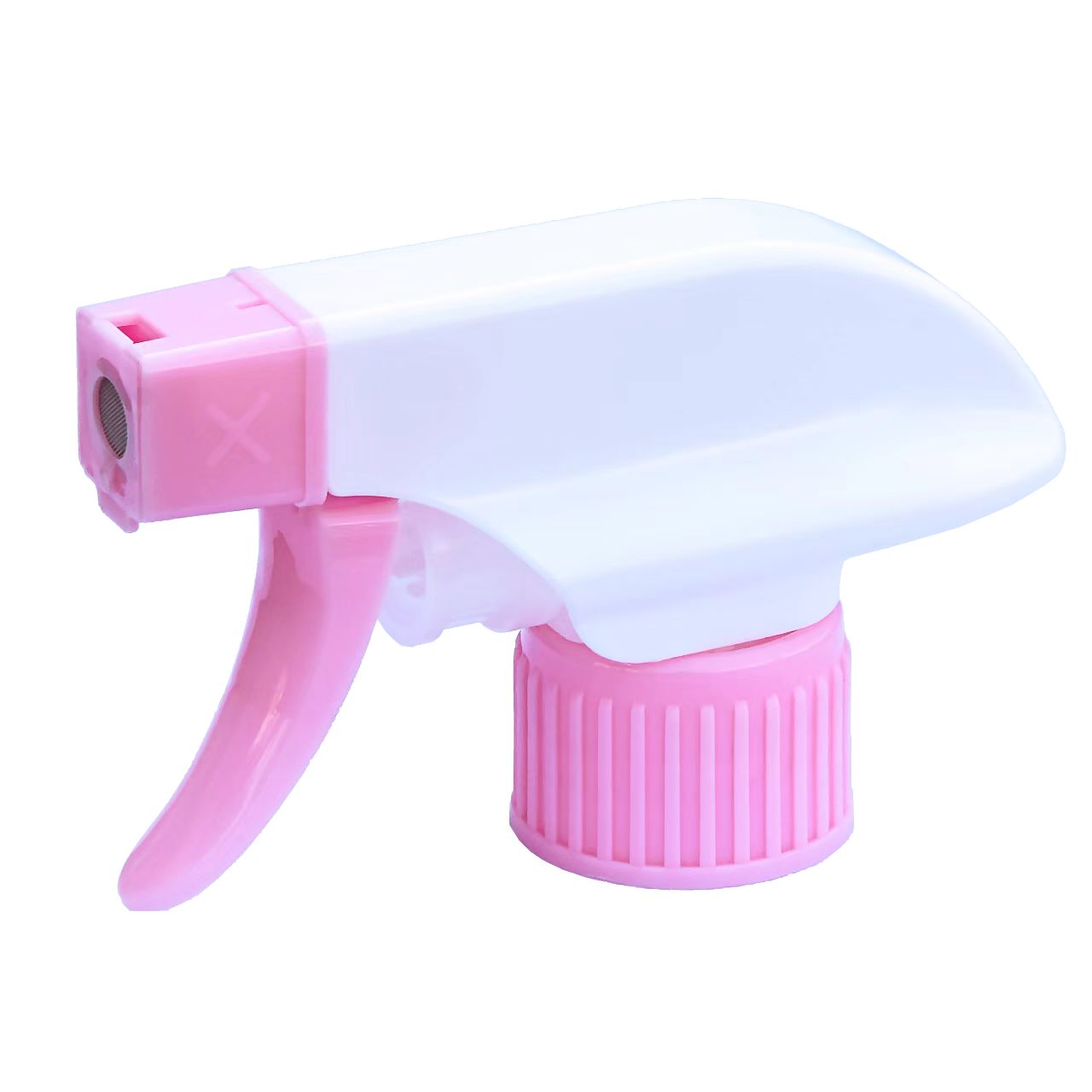
ML-101G1: an all-plastic single cover foam trigger sprayer, used where a compact foam closure is preferred.
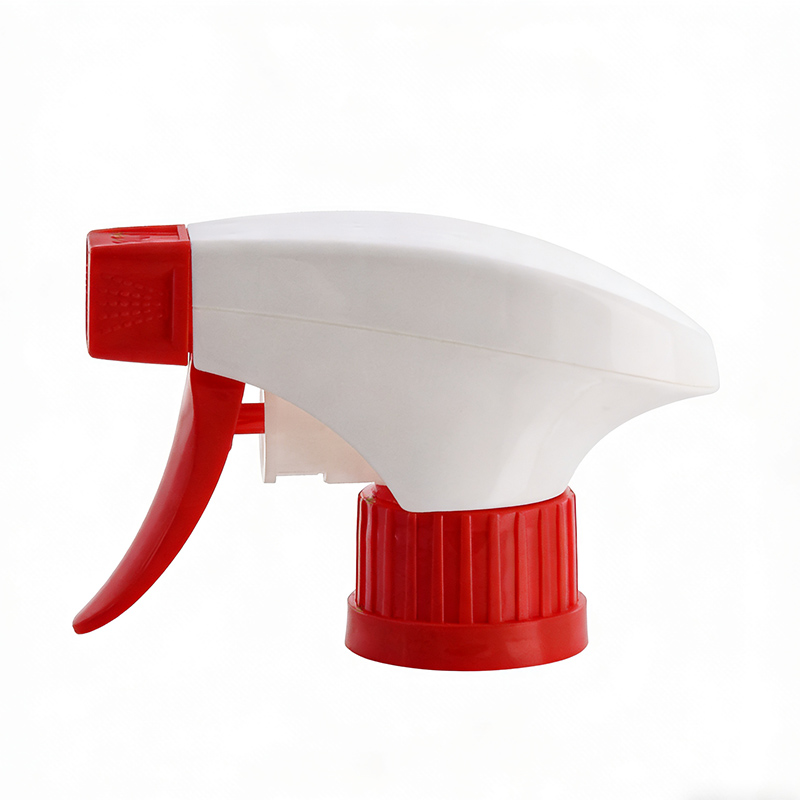
ML-102B2: a full-plastic double cover mist trigger sprayer, the fine-mist alternative when a wider coverage pattern is required.
4. Step-by-Step Breakdown: From Formula to Filled Bottle
- Classify the formula before choosing the sprayer. Note whether the liquid is acidic, contains oxygen bleach, or carries solvents, and note the intended contact time inside the pump chamber. Aggressive formulas point to the full-plastic (all-PP) version without a metal spring.
- Confirm the bottle neck finish. Measure or obtain the drawing for the bottle, and record 28/400 or 28/410 on the specification. Do not accept a “28 mm” verbal description, because both finishes fall in that diameter family and are not interchangeable.
- Select the spray function. Choose foam for stain, odour, grooming or crate products, and fine mist for bedding, deodorising and light surface work. Specify the model accordingly — ML-204Z1 for foam, or a mist variant from the same all-plastic PP range.
- Test with the real liquid. Sample testing can be conducted before bulk orders. Fill the actual bottle with the actual formula, then check thread engagement, leakage at the shoulder, spray or foam quality, and trigger action after a short standing period.
- Fix the commercial frame. The MOQ for wholesale trigger sprayer orders is 50,000 pieces, lead time is 7 days, and capacity at 10,000,000 pieces per month supports repeat programmes. Delivery terms are FOB or CIF, with 30/70 payment terms.
- Lock acceptance and after-sales. Acceptance criteria are defined as a pre-shipment test, and production is supported by 100% test. If a large number of products in a batch show non-human quality problems, MILA supports returns or exchanges.
| Commercial parameter | Value |
|---|---|
| MOQ (wholesale orders) | 50,000 pieces |
| Lead time | 7 days |
| Monthly capacity | 10,000,000 pieces |
| Delivery terms | FOB / CIF |
| Payment terms | 30 / 70 |
| Acceptance criteria | Pre-shipment test |
| Quality control | 100% test |
| Customization | Color / logo / caliber (OEM and ODM) |
5. Use Cases in Pet Supplies and Pet-Area Janitorial Work
- Stain and odour foam for carpets, crates and soft furnishings. Foam output keeps the cleaner on the treated spot instead of running off, which is why this is the classic ML-204Z1 application in the pet category.
- Kennel, crate and hard-surface cleaners. Foam applied to vertical surfaces clings long enough for the dwell time, while the all-plastic pump avoids the corrosion problem that bleach-based kennel cleaners create in metal-spring triggers.
- Grooming foam and coat fresheners. A compact all-plastic foam trigger such as the ML-101G1 suits smaller retail bottles where the closure should sit close to the shoulder.
- Bedding and fabric deodorising mists. Fine mist from a model such as the ML-102B2 covers wider areas with less liquid per pass, reducing drying time before the pet returns to the bedding.
- Accessory, toy and carrier cleaners. A small mist sprayer keeps the format consistent with the rest of the pet range while a different formula is offered in the same bottle silhouette.
- Adjacent household and garden lines. The same all-plastic PP trigger range also fits household cleaning and gardening products, which lets a brand consolidate trigger SKUs across categories instead of opening a separate supply chain for pet items.
One production reference from outside the pet category shows how repeat programmes look in practice. A trading company and finished-goods packaging manufacturer in Egypt has ordered 5,000,000 pieces for customer product packaging, with a stated reusable service life of 2–5 years, and reports stable product quality, satisfied end-customer feedback and repeated continuous orders; the reference product for that programme is the ML-101G2.
6. Comparison Table: Matching the Model to the Pet Spray Job
| Model | Output type | Body / cover style | Typical pet-spray task |
|---|---|---|---|
| ML-204Z1 | Foam | Inclined-pump body, leopard-head nozzle | Stain and odour foam, kennel and crate cleaning |
| ML-102B1 | Foam | Full-plastic double cover | Retail foam spray with a double-cover look |
| ML-101G1 | Foam | All-plastic single cover | Compact grooming foam bottles |
| ML-202D1 | Foam | Inclined-pump single cover | Alternative foam body for the same formulas |
| ML-201B1 | Foam | Inclined-pump single cover | General foam cleaning of pet areas |
| ML-203H1 | Foam | Inclined-pump, dolphin-head nozzle | Foam products where a different nozzle profile is preferred |
| ML-102B2 | Mist | Full-plastic double cover | Bedding, fabric and surface deodorising mists |
| ML-101G2 | Mist | All-plastic single cover | Compact mist bottles for pet accessories |
| ML-201B2 | Mist | Inclined-pump single cover | Mist variant within the inclined-pump family |
| ML-103C1 | Mist | Trigger sprayer body | General spray applications |
Output type and cover style follow the manufacturer’s product documentation for each model. Thread size is confirmed at order level: the range covers both 28/400 and 28/410, and the final configuration should be reconfirmed with the supplier before the purchase order is issued.
7. FAQ
Do trigger sprayers for pet cleaning products need mandatory certification?
There is no mandatory industry certification for this product category. MILA’s trigger sprayers follow general plastic packaging material requirements, and the relevant checks are plastic material safety, leak-proof performance, thread compatibility with 28/400 or 28/410 bottles, and chemical compatibility with the intended cleaning liquid. At company level, MILA Plastic Industry holds ISO 9001:2015 and ISO 14001:2015 certification and SGS compliance, and its trigger sprayer designs are covered by utility model patents issued by the China National Intellectual Property Administration.
Can a PP trigger sprayer handle the cleaning agents used on pet areas?
The full-plastic version uses an all-plastic structure without a metal spring, which removes the rust risk that corrosive liquids cause in conventional triggers, and the range is suitable for household detergents, cleaning agents and car-care fluids. Two limits apply. A non-full-plastic version also exists, using accessories made of other materials, so the full-plastic specification must be written explicitly on the order. And when a formula is highly corrosive, MILA recommends chemical pre-testing with the actual liquid before mass production, because compatibility depends on concentration and contact time as well as on the material.
What is the minimum order quantity and which commercial terms apply?
The MOQ for wholesale trigger sprayer orders is 50,000 pieces. Delivery terms are FOB or CIF, payment terms are 30/70, and acceptance criteria are defined as a pre-shipment test. For planning, monthly capacity is 10,000,000 pieces and the standard lead time is 7 days, which allows repeat programmes to be scheduled without holding excessive safety stock.
Can I test samples before placing a bulk order?
Yes. Sample testing can be conducted before bulk orders, and it is the stage where the two project risks are resolved: bottle fit and liquid compatibility. The useful test is not a visual inspection of the sprayer alone, but a trial on the actual bottle with the actual formula — checking thread engagement on the 28/400 or 28/410 neck, leakage at the shoulder after standing, foam or mist quality from the chosen output type, and trigger action after the filled bottle has rested.
What is the lead time, and how is bulk quality verified?
Lead time is 7 days, supported by a monthly capacity of 10,000,000 pieces, and production is covered by 100% test with a pre-shipment test as the acceptance criterion. If a large number of products in a batch show non-human quality problems, MILA supports returns or exchanges. To move a pet spray project forward, send the bottle neck specification (28/400 or 28/410), the intended cleaning agent and the required output type — foam, such as the ML-204Z1, or a mist variant from the same all-plastic PP range — and request a sample set through the MILA sales team on WhatsApp or via www.triggerssprayer.com.
8. Conclusion
In pet-area cleaning sprays, the trigger sprayer decides whether the product survives the first month on a retailer’s shelf or in a cleaning trolley. Bottle fit is settled by matching the sprayer to a 28/400 or 28/410 neck before the order is written, and chemical resistance is settled by removing the metal spring from the liquid path — which is what the full-plastic PP construction does.
For a foam product, the ML-204Z1 is the direct starting point; for a mist product, a mist variant from the same all-plastic PP range keeps the chemistry, the bottle and the brand colour consistent across the line. What remains is verification: confirm the neck finish, test the real liquid on a sample, then set MOQ, lead time and the pre-shipment test as contractual checkpoints rather than assumptions.
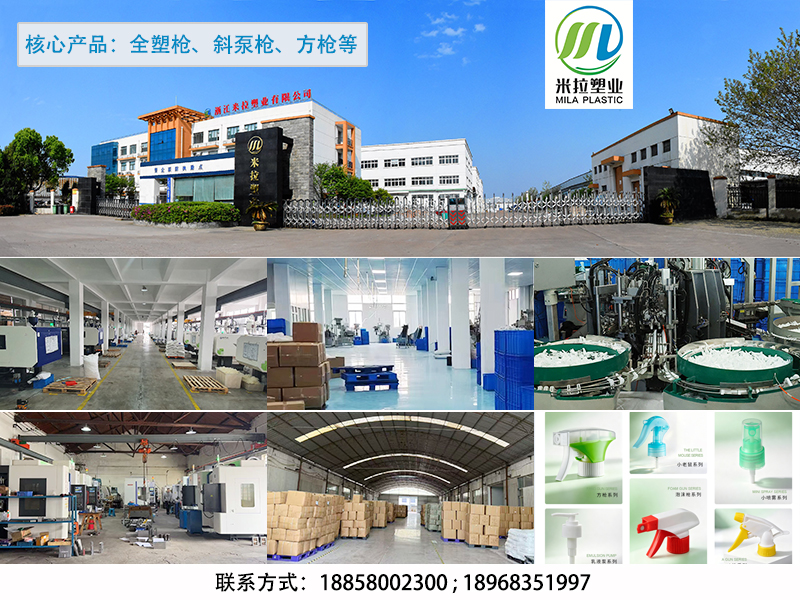
Next step: send your bottle neck specification, cleaning formula and required output type to MILA Plastic Industry for a sample and quotation.
Contact: Bruce Liu · Tel / WhatsApp / WeChat +86 188-5800-2300 · Email 18858002300@163.com · Address 1# Panlong South Road, Donggang Development Zone, Kecheng area, Quzhou City, Zhejiang Prov., China.
Have Questions or Need More Details?
Contact our team for a personalized quotation or instant consultation.
Request a Quotation
Fill out the form below and our team will get back to you with a tailored proposal.
WhatsApp Direct Chat
Prefer to chat in real-time? Message us on WhatsApp for instant assistance & quick answers.
- Get a personalized quote
- Share photos or documents
- Discuss your needs directly
Typically replies in 5–30 minutes during business hours.