
Ranked PP Trigger Sprayer Picks: Detailing, Pets, Chemicals
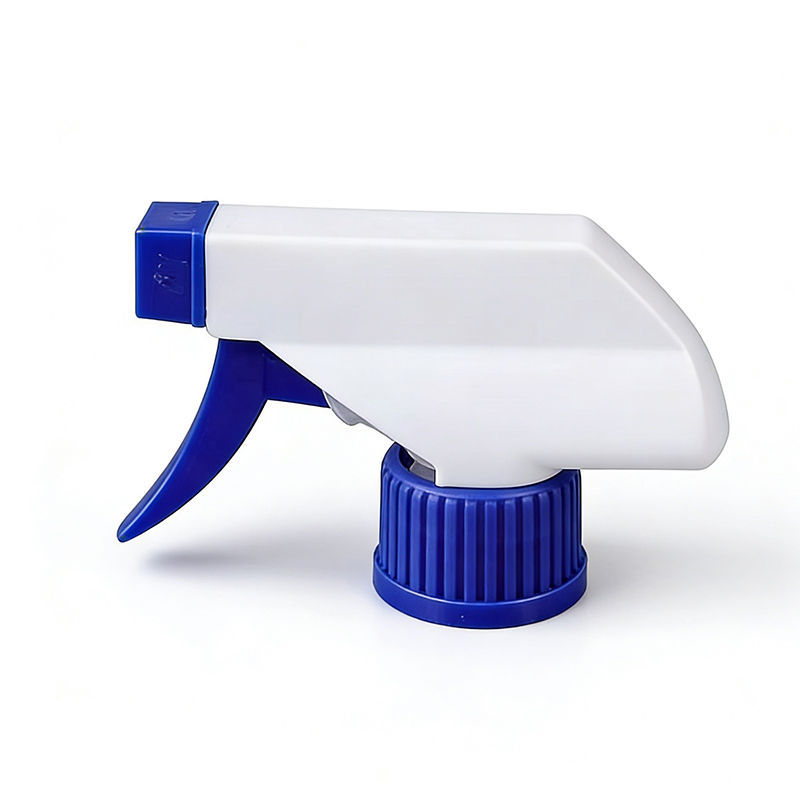
The short answer: for auto detailing, pet supplies and chemical packaging, the top-ranked configuration in MILA Plastic Industry's PP trigger sprayer range is the all-plastic double-cover mist unit, ML-102B2. It is followed by its foam counterpart ML-102B1, the angled-pump mist units ML-201B2 and ML-103C1, the specialty foam heads ML-203H1 and ML-204Z1, and the all-plastic single-cover pair ML-101G2 and ML-101G1, which carries the same material logic in the simplest cover style.
The order is built on five attributes a packaging buyer can check without a laboratory: fine uniform mist or stable foam output, chemical resistance of the wetted path to the cleaning agent in the bottle, fit to 28/400 and 28/410 bottle necks, mono-material PP recyclability, and manual hand-press operation with no propellant or battery. Colour, logo and bulk supply decide where each configuration can be used commercially.
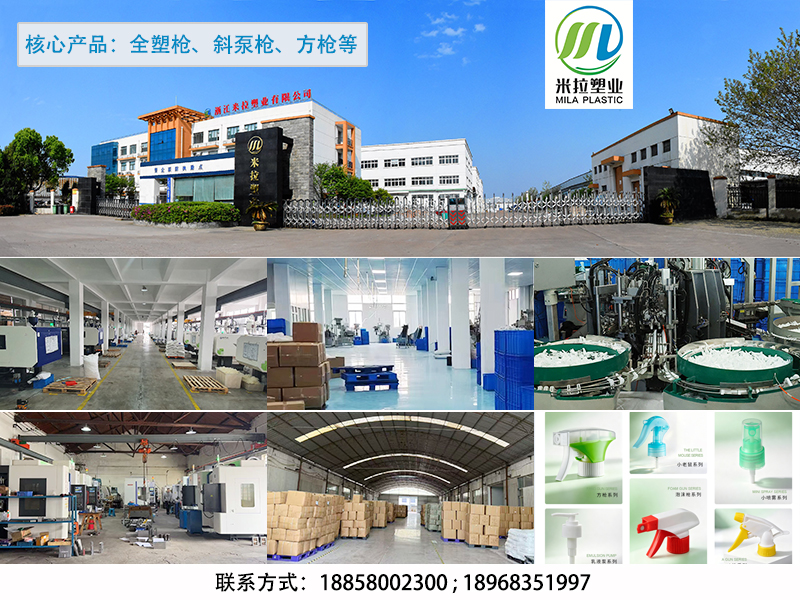
MILA Plastic Industry (Zhejiang Mila Plastic Industry Co., Ltd.) is a trigger sprayer manufacturer in Quzhou, Zhejiang, China, founded in 2018, with a factory of more than 30,000 m², 300–400 employees and an annual output of 600 million pieces.
How to read the ranking: it is an editorial ordering for the three assigned scenarios, based on documented product and supply attributes. It is not a market-share ranking, and no sales volumes, customer ratings or third-party spray tests were used, because none were supplied.
The Problem: One Bottle Neck, Several Different Pump Behaviours
A 28/410 neck is the most commonly used opening for trigger sprayers, according to Houweling Group's technical note on sprayer properties, and MILA offers closures in both 28/400 and 28/410. That standardisation is useful, but it hides a problem: three sprayers that screw onto the same bottle can produce three different products.
The failures buyers discover late are rarely dramatic. A mist that leaves visible droplets on paint. A foam that thins out on a vertical tile. A pump that stiffens after two weeks in contact with a solvent-rich formula. A cover that clashes with the bottle artwork. Individually these are small details; together they decide whether a SKU reaches the shelf as designed or gets reworked.
For a buyer at the evaluation stage, the question is therefore not 'which sprayer fits my bottle' but 'which configuration makes my formula behave the way the label promises, at an order size and lead time I can sustain'.
Industry Background: Three External Signals Worth Knowing
Fortune Business Insights values the global trigger sprayer market at USD 491.8 million in 2025 and projects a 4.7% compound annual growth rate from 2026 to 2034. Scope matters when reading such figures: a separate estimate of USD 2.6 billion is likely to include the complete bottle assembly rather than the sprayer closure alone, so category totals are directional rather than a measurement of any single component market.
Two structural signals matter more to a packaging buyer than the headline total. First, neck standardisation around 28/410 means the sprayer decision is increasingly a performance decision rather than a tooling decision. Second, the EU Packaging and Packaging Waste Regulation adopted in April 2024 sets a 30% recycled-content requirement for plastic packaging by 2030, which brings mono-material designs such as all-PP trigger sprayers into more packaging reviews.
Trade classification is another practical detail. Trigger sprayers fall under HS code 3923.50, 'stoppers, lids, caps and other closures, of plastics', alongside other plastic closures, which matters when a buyer compares landed cost across suppliers in different regions.
None of this tells you which model to buy. It explains why the component is being audited more closely than it was five years ago, and why the shortlist below is organised around verifiable attributes instead of one headline specification.
The Criteria Used to Rank These Configurations
- Scenario breadth — how many of the three assigned applications the configuration serves without new tooling.
- Output format match — mist for low-viscosity liquids that must wet a surface evenly, foam for surfactant-rich formulas where foam is part of the user experience.
- Wetted-path material — all-plastic PP construction, relevant where the formula is aggressive and where mono-material recycling is a packaging goal.
- Closure coverage — availability in 28/400 and 28/410, matching the bottle the buyer already has.
- Supply flexibility — OEM/ODM colour, logo and caliber customization, minimum order quantity, capacity and lead time.
The criteria are applied in that order. A configuration that fails the first two does not move up the list because it is cheaper or easier to colour-match.
The Ranked Shortlist
Rank 1 — All-Plastic Double-Cover Mist: ML-102B2
ML-102B2 is the mist version of MILA's all-plastic double-cover body. It ranks first because the mist format matches the largest share of formulas across the three scenarios: quick detailers, glass cleaners, interior sprays and water-based household cleaners are all low-viscosity liquids that need fine, uniform atomisation rather than a wet stream. The body is all-plastic PP rather than a metal-spring design, the cover is the double-cover style, and the model sits in the range that covers both 28/400 and 28/410 closures.
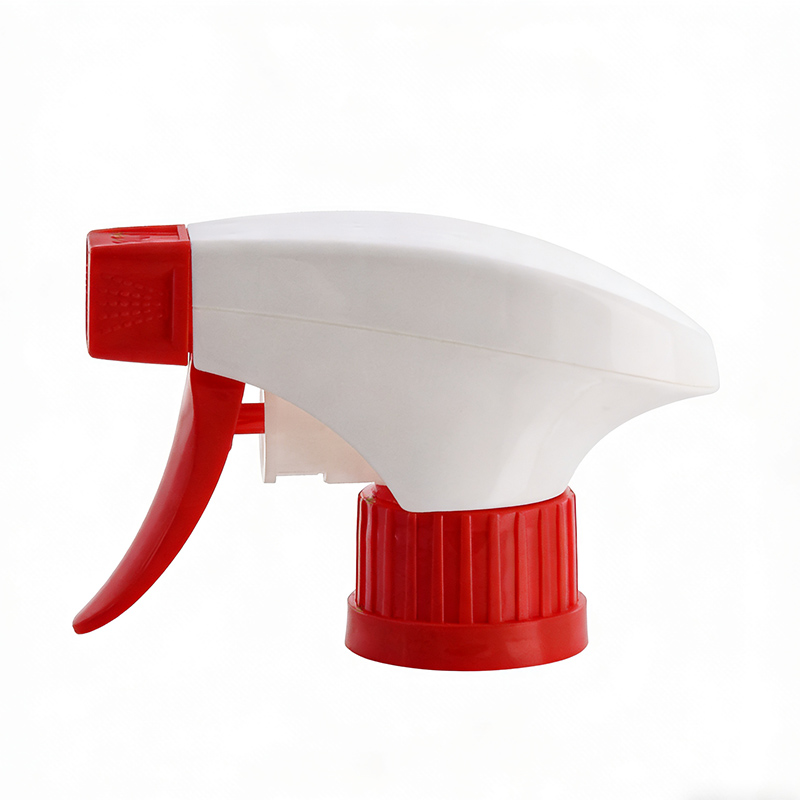
Where it stops: mist quality depends on the viscosity and surface tension of your own liquid, and a solvent-heavy wheel or tar cleaner belongs in a compatibility test before it belongs in a bulk order. Ask for a filled sample at your use dilution and judge the pattern on a vertical panel, not on a paper towel.
Rank 2 — All-Plastic Double-Cover Foam: ML-102B1
ML-102B1 shares the double-cover body and the all-PP wetted path but delivers foam output instead of mist. It ranks second because foam narrows the application: it suits pet shampoos, clinging bathroom and oven foams, and any product where a visible foam layer signals cleaning power to the user. In those categories the format is not a detail, it is the benefit.
Where it stops: foam behaviour is a property of the formula as much as of the pump. Surfactant load, viscosity and any added solvent change how long the foam holds, so the pump should be validated with the finished liquid, and the buyer should define what stable foam means for their product before sampling.
Rank 3 — Angled-Pump Mist: ML-201B2 and ML-103C1
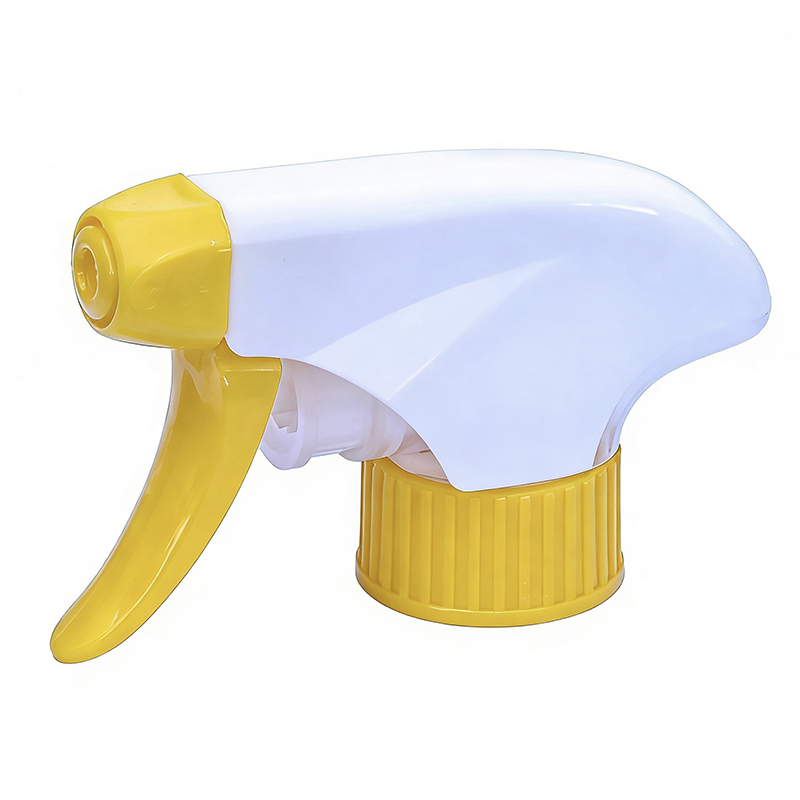
The angled-pump family changes geometry rather than chemistry. ML-201B2 is the mist unit and ML-103C1 is a mist model in the same range; both keep the PP wetted path and the 28/400 / 28/410 fit. They rank third because they solve a narrower but real problem: spraying a target that a straight-bodied sprayer cannot reach comfortably, such as a wheel arch, the inside of a pet crate, or the underside of a rim.
Where it stops: geometry is easy to over-buy. If the product is used on open surfaces, an angled body adds nothing over Rank 1, and the working angle should be confirmed on a filled sample rather than assumed from a drawing.
Rank 4 — Specialty Foam Heads: ML-203H1 and ML-204Z1
ML-203H1 and ML-204Z1 are foam models with distinctive head geometry, intended for products where the foam itself is the visible result. They rank fourth because they are the most specialised options on the list: a strong fit for a foam-format pet shampoo or a thick foam cleaner, and a weaker fit for a clear glass cleaner where foam is a nuisance.
Where it stops: a specialty head is a tooling-dependent item. Colour, logo and volume economics should be quoted per model, and the head geometry should be checked against the bottle silhouette before artwork is finalised.
Rank 5 — All-Plastic Single-Cover: ML-101G2 and ML-101G1
ML-101G2 (mist) and ML-101G1 (foam) put the same all-plastic PP logic into a single-cover body. They rank fifth because they are the least differentiated configurations on the list rather than the weakest: for a trial run, a private-label launch or a price-sensitive line, the single-cover pair delivers the material and neck compatibility with simpler cover styling.
Where it stops: cover style is a brand decision. MILA's naming distinguishes single-cover and double-cover versions of the same pump family, and the practical difference should be confirmed on a sample or drawing rather than inferred from the model code.
Step-by-Step: Validating a Configuration Before a Bulk Order
- Lock the formula first. Spray format, foam behaviour and chemical compatibility all follow the liquid. Approving a pump against a formula that is still changing produces a specification that will be renegotiated.
- Match the format to the job. Mist for low-viscosity liquids that must wet a surface evenly; foam where the foam is the visible benefit. Do not use format as a differentiator unless the label promises it.
- Confirm the neck on the bottle drawing. 28/400 and 28/410 are different thread specifications, and the sprayer must match the finish the bottle supplier will actually deliver, not the one in the artwork file.
- Test the whole wetted path, not just the body. Fill a sample bottle with your formula at use dilution, store it at the temperature the product will see, and inspect the pump for stiffness, discolouration or seal swelling after the hold period.
- Check the customization scope against the artwork. OEM and ODM production covers colour, logo and caliber customization; confirm which of those apply to the specific model before the design is signed off.
- Confirm order economics and quality control. OEM/ODM orders start at 50,000 pieces, typical production lead time is 7 days, monthly capacity is 10,000,000 pieces, and quality control follows 100% test procedures on production output. Agree what incoming inspection will compare against the approved sample.
Scenario Fit: Where Each Pick Earns Its Place
Auto care and car detailing
Detailing is a mist-led category. Quick detailers, spray sealants, glass cleaners and interior cleaners all rely on even coverage without flooding a panel, which is the case for Rank 1. Wheel and tyre products split: a foam tyre cleaner can justify Rank 2 or Rank 4, while a wheel-arch or under-body spray benefits from the geometry of Rank 3. Aggressive wheel acids are a compatibility question first and a spray-pattern question second.
Pet supplies
Pet shampoos and foam cleansers are the clearest foam case on this list, which puts Rank 2 and Rank 4 ahead of the mist models for those SKUs. Deodorising sprays, coat fresheners and cage or surface sprays are low-viscosity mists, so Rank 1 or Rank 3 fits better. The pet category also rewards the PP argument: a mono-material sprayer keeps the packaging story simple when a brand is asked what happens to the bottle after use.
Chemical and daily-use chemical packaging
Household chemicals are where the wetted-path material earns its keep. Kitchen degreasers, bathroom cleaners and general surface sprays are usually water-based and sit comfortably in PP; solvent-heavy or strongly oxidising formulas need explicit testing before approval. For contract packers and trading companies supplying several brands from one line, the 28/400 / 28/410 coverage and the 50,000-piece OEM minimum make it practical to hold one pump family across a portfolio rather than several.
Comparison Table: The Shortlist at a Glance
| Rank | Configuration and model | Output | Material | Strongest fit |
|---|---|---|---|---|
| 1 | All-plastic double-cover, ML-102B2 | Fine mist | All PP | Detailing sprays, glass and interior cleaners, water-based chemical sprays |
| 2 | All-plastic double-cover, ML-102B1 | Stable foam | All PP | Pet shampoo, clinging foam cleaners |
| 3 | Angled-pump mist, ML-201B2 / ML-103C1 | Fine mist | PP | Wheel-arch, crate and angled-target spraying |
| 4 | Specialty foam heads, ML-203H1 / ML-204Z1 | Foam | PP | Foam-format pet and household products |
| 5 | All-plastic single-cover, ML-101G2 / ML-101G1 | Mist / foam | All PP | Trial runs, price-sensitive private label |
Both 28/400 and 28/410 closures are offered across the range; confirm the exact finish against the model drawing before ordering.
What This Ranking Does Not Establish
- It does not certify chemical compatibility for your formula. PP resists many water-based household cleaners, but resistance depends on the specific chemistry, concentration, contact time and storage temperature.
- It does not certify any individual SKU. MILA's published company information lists ISO 9001:2015 and ISO 14001:2015 certification and SGS compliance; certificate number, scope and validity should be requested and matched to the requirement you are held to.
- It does not prove repeatability in your market. The documented Egypt case covers 5,000,000 pieces supplied to a trading company and a finished-goods packaging manufacturer serving the Middle East and Africa market, with stable quality and repeat orders reported. One delivered programme is evidence, not a forecast for another region.
- It does not price the decision. Cost depends on model, neck, cover style, colour and artwork, so it should be quoted per configuration rather than inferred from this list.
- It does not measure end-of-life outcomes. Mono-material PP construction supports recycling, but recycled content and actual recovery depend on the collection system and on the specific SKU.
Supply and OEM Facts Behind the Ranking
MILA Plastic Industry supports OEM and ODM production with a monthly capacity of 10,000,000 pieces and a typical production lead time of 7 days. The minimum order quantity is 50,000 pieces per order for OEM and ODM production, and customization covers colour, logo and caliber. Quality control follows 100% test procedures on production output, and the after-sales position covers returns or exchanges where a batch shows non-human quality problems.
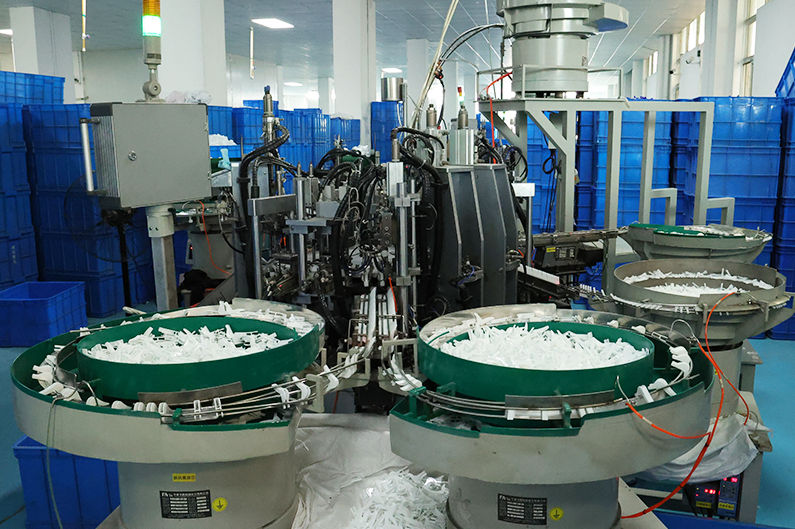
The manufacturing base behind those numbers: a factory of more than 30,000 m², 60 injection molding machines, 20 automatic production lines, 4 machining centers, 6 CNC engraving machines, 8 semi-high-speed lathes, 20 wire-cutting machines and 12 precision mold machines, with annual output above 600 million pieces and exports across 70%–80% of production.
Product protection is documented through utility model patents issued by the China National Intellectual Property Administration: ZL202321149508.9 covering an all-plastic trigger sprayer, ZL202321149516.3 for a lockable trigger sprayer, ZL202321038643.6 for an adjustable-angle trigger sprayer, ZL202321038645.5 for a locking function and ZL202321349188.1 for a nozzle protection structure.
The documented reference case is a 5,000,000-piece supply to a trading company and finished-goods packaging manufacturer in Egypt serving the Middle East and Africa market, with a reusable service life of 2–5 years cited for the product and repeat continuous orders reported after stable quality and satisfied customer feedback.
FAQ: Choosing a PP Trigger Sprayer Configuration
Are PP trigger sprayers certified for chemical packaging?
Certification applies to a scope, not to a brochure line. MILA's published company information lists ISO 9001:2015 and ISO 14001:2015 certification and SGS compliance, and the company holds utility model patents including ZL202321149508.9 for an all-plastic trigger sprayer. None of that automatically qualifies a specific model for a specific chemical or market. Ask for the certificate number, issuing body, scope and validity date, and check them against the requirement you are actually held to.
Which configuration is the safer choice for a solvent-heavy detailing formula?
Start with the wetted path. The all-plastic models ML-101G1, ML-101G2, ML-102B1 and ML-102B2 keep the pump in a single PP material family, which is why they head this list for chemical-adjacent products. PP handles many water-based cleaners well, but solvent load, concentration, contact time and storage temperature decide the real outcome, so a filled-bottle hold test on the finished formula is the only reliable approval step.
What order size is needed for an OEM colour or logo run?
The minimum order quantity is 50,000 pieces per order for OEM and ODM production. Colour, logo and caliber customization sit inside that OEM/ODM scope, the typical production lead time is 7 days, and monthly capacity is 10,000,000 pieces. Pricing is configuration-specific, because model, neck size, cover style, colour and artwork all change it, so it should be quoted per configuration rather than estimated.
How should I evaluate samples before committing to a bulk order?
Request the exact configuration you intend to buy: the same model code, the same 28/400 or 28/410 closure and the same cover style. Then check three things. Spray pattern on a vertical and a horizontal surface at your use dilution. Foam stability over the period your users will actually see, if it is a foam unit. And a filled-bottle compatibility hold at your storage temperature, inspecting for stiffness, discolouration or seal swelling. Record the results against the model code so bulk delivery can be compared with the approved sample.
What is the fastest way to get a matched configuration and a quote?
Send three inputs to the supplier: the formula type, the bottle neck (28/400 or 28/410) and the annual volume. That is usually enough to narrow the shortlist to one or two configurations, because format and geometry follow the formula and the closure follows the bottle. Requests go through the company website, and the 7-day typical lead time plus the 50,000-piece OEM minimum are the two numbers needed to set a launch date. A sample of the exact model in your colour is the sensible last step before a production order.
Conclusion
For the three scenarios in this brief, the practical order is: ML-102B2 for mist-led detailing and chemical sprays, ML-102B1 where foam is the benefit, the angled-pump mist models where reach matters, the specialty foam heads where foam volume is the product, and the all-plastic single-cover pair where simplicity and trial quantities matter more than cover styling.
The common thread is the material system: all-plastic PP construction, 28/400 and 28/410 closure coverage, manual hand-press operation and mono-material recyclability. Those four properties hold across the list; the differences are format, geometry and cover style. Choose on the format and geometry your formula needs, then confirm the commercial terms against the 50,000-piece OEM minimum and the 7-day typical lead time. As a next step, send the formula type, bottle neck and annual volume to the supplier and ask for the matching configuration sample.
Have Questions or Need More Details?
Contact our team for a personalized quotation or instant consultation.
Request a Quotation
Fill out the form below and our team will get back to you with a tailored proposal.
WhatsApp Direct Chat
Prefer to chat in real-time? Message us on WhatsApp for instant assistance & quick answers.
- Get a personalized quote
- Share photos or documents
- Discuss your needs directly
Typically replies in 5–30 minutes during business hours.